Set out on an enlightening adventure through Bagamoyo, a historically and culturally rich city that was once the most important trading port on the East African coast. A thorough exploration of the city's legendary past and its important role in regional trade is provided by this enthralling Bagamoyo Historical Tour.
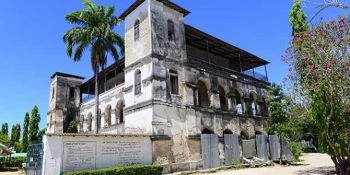
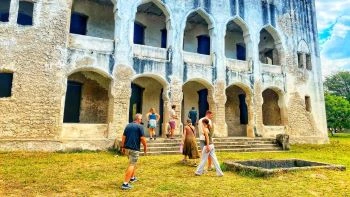
Start your tour by touring the historic Kaole Ruins, which are home to the 13th-century graves and the Coral Mosque. The significance of Bagamoyo as an early Arab settlement and its rich history are revealed by these relics. The remains of the Shirazai trade town and the Coral Mosque are among the ruins that provide a concrete link to the city's history.
Next, visit the Wami River's historic Old Ferry. This location is a moving reminder of Bagamoyo's involvement in the slave trade. You will learn more about the city's complicated past as your guide relates the terrifying stories of this time.
The name Bagamoyo, which means "lay down your heart" in Swahili, captures the fervent hope of those who were taken as slaves. This expression highlights the city's rich historical legacy while movingly capturing the uncertainty these people face.
Along the way, you will also see the Caravan Serai Museum, which features displays about the history of Bagamoyo and its involvement in the slave trade, and the Catholic Mission, one of the oldest of its kind in East Africa.
The Old Fort, a whitewashed structure with a diverse past that includes time spent as a slave holding facility and a provision house, is a reminder of the city's complex past
Before carrying on with your exploration, savor a traditional lunch that offers a taste of the local cuisine and culture. A visit to the Wami River for a picture at the Old Ferry marks the end of the tour.
Bagamoyo Historical Tour Day Trip Itinerary
08:30: Following breakfast, we will pick you up from your hotel or home and drive 75 kilometers north of Dar es Salaam. Depending on traffic, the trip should take about one and a half hours. 10:00 a.m. Reach Bagamoyo, a historic town. Bagamoyo was founded in the late 18th century and has a long and varied history. It was the capital of East German Africa and then a significant Arab trading port.
Visit the Kaole Ruins, which are roughly 3 kilometers from Bagamoyo town, to start your tour. Early Arab settlement remnants can be found at this location, including a 13th-century mosque that is regarded as one of Tanzania's oldest and a later 15th-century mosque. Numerous historic tombs and graves, as well as a small museum displaying a variety of artifacts, are also part of the ruins.
With the help of your guide, you can explore the ruins and learn about their history, including how coral stones were used to build them. After touring the museum, stroll past the striking baobab tree in the area.
After that, proceed to Bagamoyo's Old Fort, a notable historical building. During colonial times, this fort, which was constructed in 1860, was used as a military camp, a provision house, and a facility for holding slaves.
You can see and learn about these reptiles, which are kept for display and sale, at the Crocodile Ranch on your way back to Bagamoyo. Continue to the Slave Market, where a small museum showcasing Bagamoyo's history in relation to the ivory and slave trades is located. Old photos, records, and artifacts that identify Bagamoyo as a major Nyamwezi caravan stop are on display at the museum.
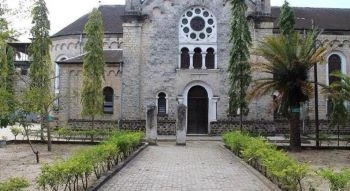
Proceed to the Catholic Mission, which was among the first Catholic establishments in East Africa. The mission, which was first founded in the late 1800s to aid enslaved children, subsequently developed into a church and school. The main church, a stone memorial tower honoring explorer David Livingstone, a mission cemetery, and other missionary buildings are all part of the compound. See the Caravan Serai Museum, which features displays about the history and culture of Bagamoyo, with a special emphasis on the slave trade.
Discover Stone Town (Mji Mkongwe), which still has remnants of the German era, including the Post Office, Liku House, and the old German Boma (colonial administrative offices). See the local fish market, the ruins of the German Customs House (1895), and the port at Old Bagamoyo by going to the beach. Watch the colorful fish auctions on the beach if you have time.
13:00: Visit one of the town's resorts for lunch and some downtime. Enjoy the beach, ocean, and resort amenities in the afternoon.
Return to Dar es Salaam at 16:00.