Where is Mount Kilimanjaro Located?
Mount Kilimanjaro, the highest peak in Africa, is one of the most iconic mountains in the world. Standing tall at 5,895 meters (19,341 feet), it attracts thousands of trekkers, climbers, and nature lovers from around the globe every year. But where exactly is Mount Kilimanjaro located? Understanding its location is essential for anyone planning to visit or climb this majestic mountain.
Mount Kilimanjaro is situated in northeastern Tanzania, a country in East Africa known for its stunning landscapes and diverse wildlife. The mountain lies within Kilimanjaro National Park, a UNESCO World Heritage Site that protects the environment surrounding the peak. Its position near the border with Kenya makes it accessible from multiple entry points, but the majority of climbers start their journeys from Tanzanian towns, primarily Moshi and Arusha.
The region around Mount Kilimanjaro is rich in cultural heritage, predominantly inhabited by the Chagga people, who have lived on the mountain’s lower slopes for centuries. Visitors to Kilimanjaro often have the opportunity to experience the vibrant Chagga culture, their traditions, and agricultural lifestyle, which adds a unique dimension to the trekking adventure.
One of the distinctive features of Kilimanjaro’s location is its status as a free-standing volcanic massif. Unlike many mountain ranges that form part of larger chains, Kilimanjaro rises dramatically from the surrounding plains, creating a breathtaking sight that dominates the horizon. This isolation means that the mountain’s different climatic zones are easily distinguishable, offering trekkers a diverse and changing landscape as they ascend.
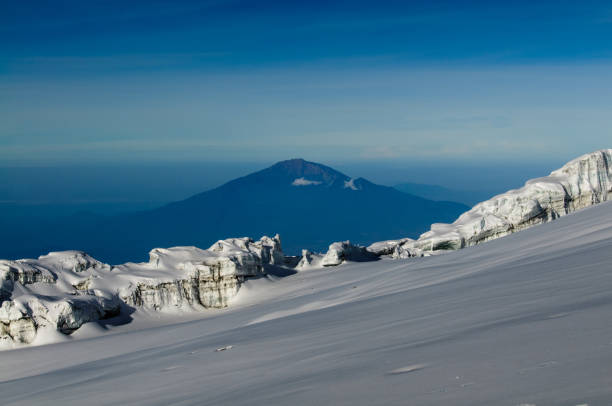
The base of Mount Kilimanjaro begins in lush tropical rainforest, teeming with wildlife such as colobus monkeys, elephants, and colorful birds. As you climb higher, the environment changes through several distinct zones: from montane forests to heath and moorland, then alpine desert, and finally to the arctic summit covered in snow and glaciers. This incredible variety is a direct result of Kilimanjaro’s unique geographical location near the equator combined with its high elevation.
Because of its location, Kilimanjaro enjoys generally favorable weather conditions for trekking, with two rainy seasons: the “long rains” from March to May and the “short rains” in November and December. The best months to climb are generally January to mid-March and June to October, when the weather is drier and clearer, providing better summit success rates and spectacular views.
Travelers planning to visit Mount Kilimanjaro typically fly into Kilimanjaro International Airport, located between the towns of Moshi and Arusha. From there, it is a relatively short transfer to the starting points of various trekking routes on the mountain. The accessibility of Kilimanjaro’s location, combined with its awe-inspiring beauty, makes it one of the most popular trekking destinations in Africa and the world.
In addition to climbing, the Kilimanjaro region offers a wealth of other attractions due to its strategic location. Nearby national parks such as Arusha National Park and Lake Manyara provide opportunities for wildlife safaris, while cultural tours allow visitors to explore traditional villages and markets. This means that a trip to Kilimanjaro can be combined with a broader Tanzanian adventure, enriching the overall experience.
Mount Kilimanjaro’s location in northeastern Tanzania near the Kenya border places it at the heart of East Africa’s natural and cultural wonders. Its free-standing volcanic massif rises impressively above the plains, offering trekkers a unique opportunity to experience diverse ecosystems in a relatively short climb. Whether you are an experienced mountaineer or a casual trekker, understanding where Kilimanjaro is located helps you appreciate the mountain’s grandeur and the rich environment surrounding it. Planning your trip with this knowledge ensures a more rewarding and memorable adventure in one of the world’s most spectacular mountain destinations.