


Kilimanjaro Marangu Route Overview — The Best Complete Guide to Climbing Mount Kilimanjaro
The complete Marangu Route guide — the famous Coca-Cola Route with mountain huts at Mandara, Horombo and Kibo. Compare 5-day vs 6-day itineraries, difficulty for beginners, success rates, altitude and acclimatization, cost and prices, best time to climb, maps, expert tips and booking advice for Uhuru Peak (5,895 m).
What Is the Marangu Route?
The Marangu Route is the most popular route for climbing Mount Kilimanjaro, famous for its hut accommodation and well-established trail — though the climb remains a serious physical and altitude challenge. Known affectionately as the "Coca-Cola Route", it is the only route that offers hut accommodation instead of camping, making it a favourite among first-time trekkers and those who prefer a bit more comfort on the mountain.
Marangu approaches Kilimanjaro from the southeast and typically takes 5 to 6 days to complete. While its hut comfort and gradual trail give it the easiest reputation for physical difficulty, its shorter duration means a lower success rate compared to longer routes due to less time for altitude acclimatization. That said, the 6-day option significantly improves your chances of reaching the summit.
The trail passes through lush rainforest, moorland, alpine desert, and finally the arctic summit zone — offering a diverse range of landscapes in just a few days. The path is well-defined and the huts provide bunk beds, solar lighting, and basic amenities, making it the most accessible route for climbers of all experience levels.
Advantages & Disadvantages
Is the Marangu Route right for you? Let's break it down honestly.
Advantages
- Only route with hut accommodation — no tent camping required
- Shorter duration (5-6 days) — great for tight schedules
- Well-defined, easy-to-follow trail
- Lower cost compared to other routes
- Good for beginners and less experienced trekkers
- Bathrooms and basic facilities at each hut
- No need to carry heavy camping gear
- Beautiful forest section with wildlife sightings
Disadvantages
- Lower summit success rate (75-85%) due to shorter acclimatization
- Can be crowded, especially during peak season
- Same trail for ascent and descent — less scenic variety
- Less scenic than Machame or Lemosho routes
- Basic hut facilities — shared rooms, limited privacy
- Steeper final ascent from Kibo Hut to summit
- 5-day option has very low success rate (~60%)
- Limited photography variety compared to western routes
Complete Marangu Route Overview
Our Guides' Verdict on the Marangu Route
Straight talk from the team that climbs it every month — who should book Marangu, and how to do it right.

1,600+ climbers guided on Kilimanjaro
Marangu is the route we recommend to first-time trekkers who want a roof over their heads and the gentlest trail on the mountain — with one condition: take the 6-day itinerary, never the 5-day. That extra acclimatization day at Horombo is the single biggest factor in whether you stand on Uhuru Peak or turn back at Gilman's Point.
- Book 6 days, not 5. The 5-day ascent gives your body almost no margin at altitude; the 6-day’s Horombo acclimatization hike (toward Zebra Rocks/Mawenzi Ridge and back to sleep low) is what converts attempts into summits.
- Pack for rain on day one. The Mandara rainforest is wet in every month — rain jacket, pack liner and spare socks are non-negotiable, even in the dry season.
- Huts mean dormitories. Expect shared bunk rooms at Mandara, Horombo and Kibo — comfortable and dry, but bring earplugs and zero privacy expectations.
- Summit night is the crux, not the distance. The Kibo-to-Uhuru push is only 6 km but starts at midnight in extreme cold on scree — save your legs on days 2–4 and trust your guide’s pace.
- Descend like it matters. Tired legs cause most mountain injuries; use your poles, watch the scree below Kibo, and never rush the Horombo-to-Gate final day.
- Climb it in the dry months if you can. June–October and January–March give the kindest skies; but if you must climb in the rains, Marangu’s huts make it the most sensible route on the mountain.
Climb with a Moshi-based team that briefs you the night before, walks every step with you, checks your health twice daily on the mountain, and meets you at the gate with your summit certificate. Message us on WhatsApp with your dates and fitness background — we will tell you honestly whether Marangu 6-day is your route, or whether Lemosho or Machame suits you better.
Marangu Route — Day-by-Day Itinerary
The full 5-day and 6-day itineraries with hiking times, distances, elevations and camp photos — pick your trek length below.
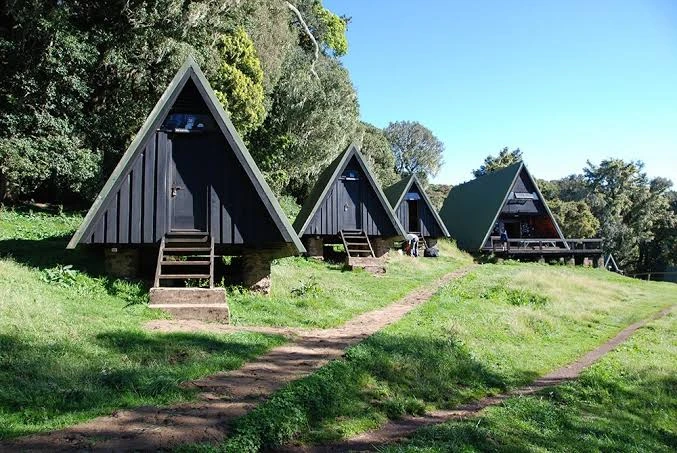
After breakfast at your hotel in Moshi, your Kizza Adventures driver will transfer you to Marangu Gate. Upon arrival at Marangu Gate, your guide will assist with registration and ensure that all necessary preparations are completed before you begin your trek through the lush montane rainforest. The trail passes through dense vegetation, towering trees, and a rich natural environment where you may spot monkeys and birdlife. Your guide will maintain a steady pace, allowing you to enjoy the forest scenery while gradually gaining altitude.
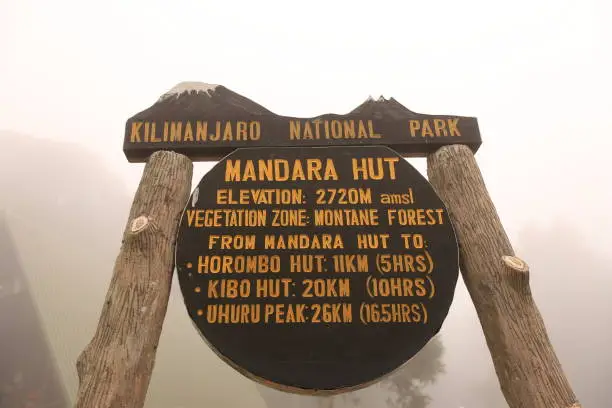
After approximately 4–5 hours of hiking, you will arrive at Mandara Hut. Settle into your mountain hut accommodation and, if time and conditions permit, enjoy an optional walk to the nearby Maundi Crater viewpoint. Dinner and overnight accommodation will be at Mandara Hut.
- Starting Point: Moshi (approximately 890 m)
- Destination: Mandara Hut (approximately 2,720 m)
- Hiking Distance: Approximately 8 km
- Driving Time: Approximately 1–1.5 hours to Marangu Gate
- Hiking Time: Approximately 4–5 hours
- Accommodation: Mandara Hut
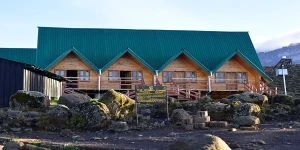
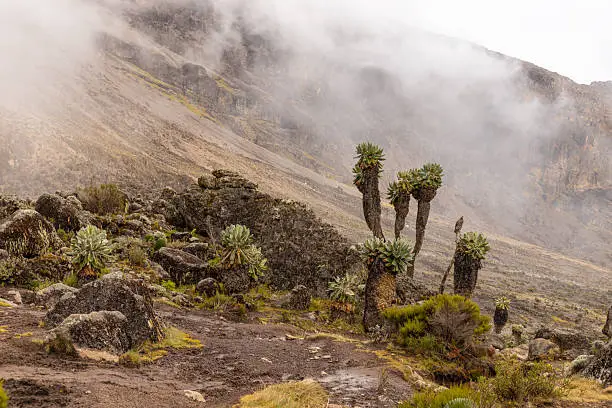
After breakfast, continue your ascent through the heath and moorland zone. The forest gradually gives way to open landscapes featuring giant heathers and distinctive high-altitude plants. As you climb, the trail offers increasingly wide views of the surrounding mountain scenery, including Kibo and Mawenzi peaks on clear days. Walk at a comfortable pace, drink water regularly, and inform your guide if you feel unwell as the altitude increases. After approximately 6–8 hours, you will reach Horombo Hut at around 3,720 m. Enjoy your evening meal, relax, and spend the night at the hut.
- Starting Point: Mandara Hut (approximately 2,720 m)
- Destination: Horombo Hut (approximately 3,720 m)
- Distance: Approximately 12 km
- Hiking Time: Approximately 6–8 hours
- Accommodation: Horombo Hut
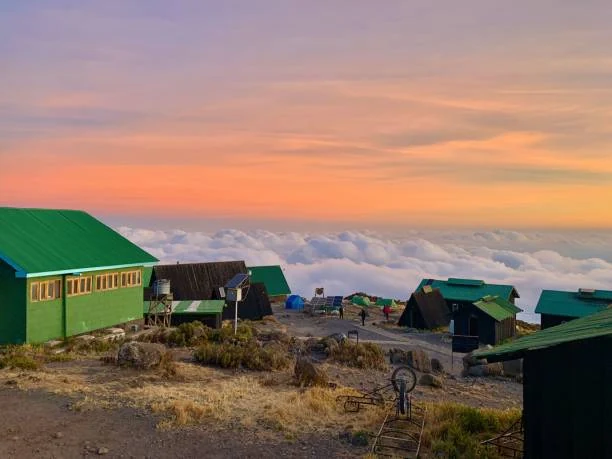
Today is dedicated to acclimatization, giving your body additional time to adjust to the altitude before you climb higher. After breakfast, your guide may lead an optional hike towards Zebra Rocks or another suitable nearby viewpoint, depending on weather conditions and the group’s fitness. You will return to Horombo Hut after the hike to rest, hydrate, and enjoy your meals. Your guide will also check on your condition and explain the next stage of the climb. Spending an additional night at Horombo Hut provides more time to acclimatize.
- Starting Point: Horombo Hut (approximately 3,720 m)
- Destination: Horombo Hut (approximately 3,720 m)
- Distance: Zebra Rocks ~5 km return (2–4 hours) or Mawenzi Ridge ~10 km return
- Hiking Time: Approximately 2–4 hours, depending on the hike
- Accommodation: Horombo Hut
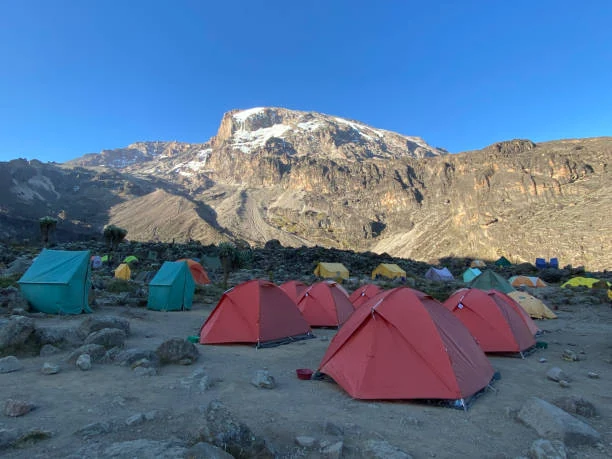
After breakfast at Horombo Hut, you will continue your ascent towards Kibo Hut, crossing the high-altitude Saddle between Mawenzi and Kibo peaks. As you leave the heath and moorland zone behind, the landscape gradually changes into an alpine desert, characterized by open terrain, volcanic rocks, and sparse vegetation.
The trail climbs steadily across this exposed landscape, offering impressive views of Mawenzi Peak and the slopes of Kibo. As the altitude increases, walking may become more challenging due to the lower oxygen levels. Your Kizza Adventures guide will encourage you to walk slowly, take regular breaks, and drink enough water throughout the journey.
After approximately 6–8 hours of hiking, covering around 9–10 km, you will arrive at Kibo Hut, situated at around 4,703 metres above sea level. Upon arrival, take time to relax and you will then have time to rest and have dinner.
- Starting Point: Horombo Hut (3,720 m)
- Destination: Kibo Hut (4,703 m)
- Distance: Approximately 9–10 km
- Hiking Time: Approximately 6–8 hours
- Accommodation: Kibo Hut
Your summit attempt begins around midnight at Kibo Hut after a light snack and a briefing from your Kizza Adventures mountain guide. You will start the challenging ascent under the night sky, following a steep trail across volcanic scree towards Gilman’s Point (5,681 m), located on the crater rim of Mount Kilimanjaro.
The climb requires patience and determination due to the steep terrain, cold temperatures, and reduced oxygen levels at high altitude. Your guide will set a careful pace and monitor your condition throughout the ascent. After reaching Gilman’s Point, continue along the crater rim towards Uhuru Peak (5,895 m), the highest point in Africa. Reaching the summit is a remarkable achievement, offering panoramic views of Kilimanjaro’s glaciers and surrounding landscapes when weather conditions permit. Take time to celebrate your accomplishment and capture photographs before beginning the descent.
From Uhuru Peak, descend to Kibo Hut for a short rest and refreshments before continuing down the mountain towards Horombo Hut. This is a long and physically demanding day, so follow your guide’s instructions, walk carefully, and take breaks when necessary. Upon arrival at Horombo Hut, enjoy your evening meal and rest after the summit climb. You will spend the night at Horombo Hut.
- Starting Point: Kibo Hut (4,703 m)
- Highest Point: Uhuru Peak (5,895 m)
- Destination: Horombo Hut (3,720 m)
- Distance: 6 km up + ~16 km down (~22 km total)
- Hiking Time: Approximately 10–14 hours
- Accommodation: Horombo Hut
After breakfast at Horombo Hut, you will begin your final descent from Mount Kilimanjaro with your Kizza Adventures mountain crew. The trail passes through the open moorland before returning to the lush montane rainforest encountered during the first day of your climb. As you descend, enjoy the changing scenery and reflect on your journey to the summit of Africa’s highest mountain. Your guide will maintain a comfortable pace and allow breaks along the way. After approximately 5–7 hours of hiking, you will arrive at Marangu Gate. After completing the park exit procedures, climbers who qualify will receive their summit certificates in recognition of their achievement.
Thereafter, you will be picked up by a Kizza Adventures driver and transferred back to Moshi. Upon arrival, you will have an opportunity to thank your mountain crew for their support throughout the trek and celebrate the successful completion of your Mount Kilimanjaro adventure.
- Starting Point: Horombo Hut (3,720 m)
- Destination: Marangu Gate (approximately 1,860 m)
- Hiking Distance: Approximately 18–20 km
- Hiking Time: Approximately 5–7 hours
- Driving Time: Approximately 1–1.5 hours from Marangu Gate to Moshi
After breakfast at your hotel in Moshi, enjoy a leisurely morning after completing your 6 days Marangu Route climb. Depending on your flight schedule, you may have time to relax, purchase souvenirs, or visit local attractions around Moshi town. At the scheduled time, your Kizza Adventures driver will take you to Kilimanjaro International Airport for your departure flight.
- Departure transfer: hotel to Kilimanjaro International Airport
Marangu Route Huts
The Marangu Route is unique for its hut accommodation. Here's what to expect at each hut.
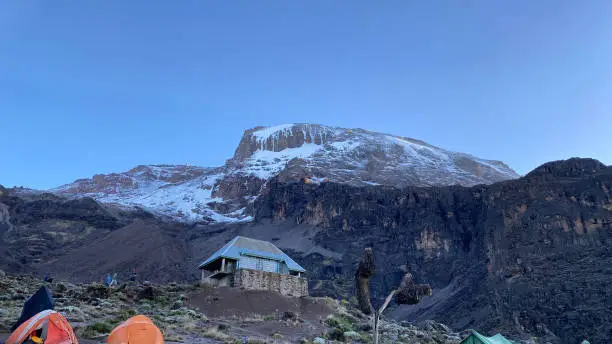
Mandara Hut (2,700m)
Capacity: 60 climbers
Room type: 6-8 bunk beds per room
Facilities: Solar lighting, flush toilets, dining hall
Water: Running water available
A welcoming A-frame hut set in a forest clearing. The setting is beautiful and the forest wildlife can be heard at night.
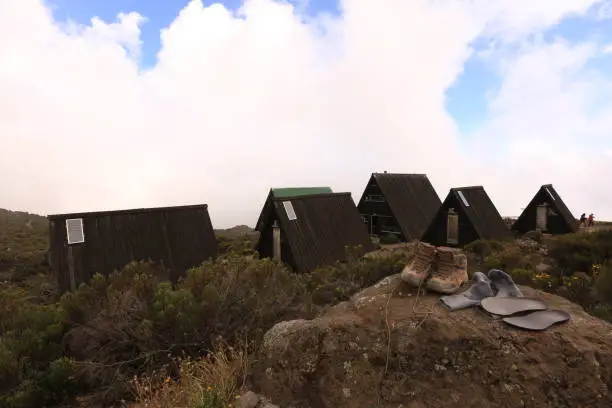
Horombo Hut (3,720m)
Capacity: 120 climbers
Room type: 4-8 bunk beds per room
Facilities: Solar lighting, flush toilets, dining hall, shop
Water: Running water available
The largest hut complex on the mountain. A real hub of activity with multiple buildings, a lively dining scene, and stunning views of Mawenzi Peak.
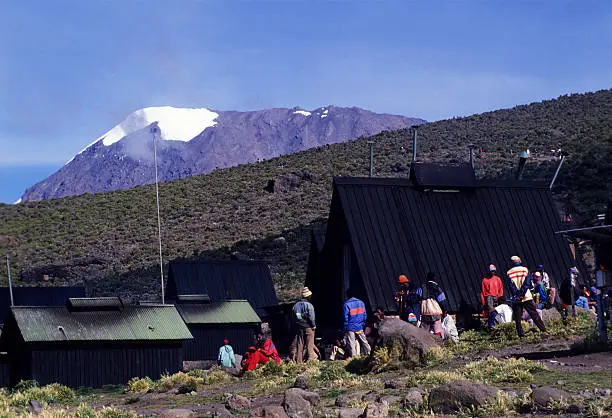
Kibo Hut (4,703m)
Capacity: 60 climbers
Room type: 4-6 bunk beds per room
Facilities: Solar lighting, basic toilets, dining hall
Water: Limited — fill up before arrival
Spartan but functional. This is the last stop before summit night. The altitude makes sleep difficult, but the anticipation of summit day is electric.
Understanding Altitude on the Marangu Route
Altitude sickness is the biggest challenge. Knowledge is your best defence.
Altitude sickness (AMS) affects nearly everyone above 3,000m to some degree. On the Marangu Route, the relatively fast ascent to 4,703m at Kibo Hut means your body has less time to adjust. Symptoms include headache, nausea, dizziness, and fatigue. The best prevention is choosing the 6-day itinerary (which includes an acclimatization day at Horombo), climbing slowly, staying hydrated, and listening to your guide.
Pole pole (slowly slowly in Swahili) is the golden rule. Your guides are trained to recognize early signs of altitude sickness and will make critical decisions about whether it's safe for you to continue. Trust their judgment — they have your safety as their top priority.
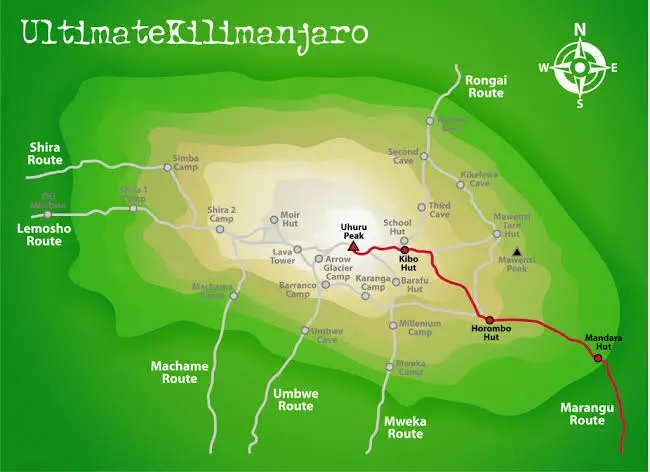
Marangu Route Map & Trail Overview
Visualise the entire Marangu Route from start to summit and back.
How Hard Is the Marangu Route?
The Marangu Route is often called the easiest of the Kilimanjaro climbing routes thanks to its huts and gradual trail, but that doesn't mean it's easy. Summit night is a serious physical and mental challenge — 6-7 hours of uphill climbing in freezing temperatures at extreme altitude. While the trail is well-defined and the gradient is generally moderate, the altitude affects everyone differently regardless of fitness level.
Who can climb? Most people with a reasonable fitness level can complete the Marangu Route. Previous hiking experience is helpful but not essential. If you can walk for 5-7 hours a day, you have a good foundation. The most important factor is your body's response to altitude, which is impossible to predict before you go.
Training recommendation: Start preparing 2-3 months before your climb. Focus on cardiovascular fitness (hiking, running, cycling, stairs) and leg strength (squats, lunges). Long weekend hikes with a loaded daypack are the best preparation. Don't underestimate the importance of mental preparation — summit night will push you beyond where you thought your limits were.
Marangu Route Summit Success Rate
The overall summit success rate for the Marangu Route is approximately 75-85% for the 6-day itinerary and around 60% for the 5-day itinerary. These rates are lower than longer routes like Lemosho (90%+) or Northern Circuit (95%+) because of the shorter acclimatization time.
At Kizza Adventures, our Marangu Route success rate stands at 90.3% on the 6-day option thanks to proper acclimatization protocols, experienced guides, and careful health monitoring. We strongly recommend the 6-day itinerary over the 5-day option. The extra day at Horombo Hut makes a significant difference in your body's ability to cope with altitude.
Expert tip: If you have the time, consider combining Marangu with additional training hikes in the region before your climb. Even a day hike to 3,000m+ can help kickstart your acclimatization.
| Kizza Adventures Marangu Route — recent climber records (2025–2026) | |||
|---|---|---|---|
| Year | Climbers | Reached Uhuru Peak | Success Rate |
| 2025 | 100 | 90 | 90.0% |
| 2026* | 75 | 68 | 90.7% |
| Combined 2025–2026 | 175 | 158 | 90.3% |
Success rate = (summits ÷ climbers) × 100. Combined: 158 ÷ 175 × 100 = 90.3%. *2026 season still in progress at time of writing. Source: Kizza Adventures Marangu Route climber records. Individual results vary with fitness, pacing, weather and altitude response — no company can promise any individual summit.
When Should You Climb the Marangu Route?
The best time to climb the Marangu Route is during the dry seasons: June to October and January to March. These months offer the best weather conditions with clear skies, minimal rainfall, and the highest summit success rates.
June-October: This is the peak climbing season. Expect clear skies, excellent visibility, and colder summit nights. The trails are busy but the conditions are most reliable. Daytime temperatures at lower elevations are pleasant (15-25°C) while summit night temperatures drop to -15°C to -25°C.
January-March: The second dry season. Generally good conditions with slightly warmer temperatures. January and February are particularly popular. The mountain is less crowded than June-October.
April-May & November: The rainy seasons. Heavy rainfall makes trails slippery and muddy, clouds obscure the views, and summit success rates drop significantly. We do not recommend climbing during these months.
Ultimate Kilimanjaro Packing List
Everything you need to reach Uhuru Peak — download our free comprehensive packing guide.
Proper packing can mean the difference between a successful summit and a struggle. Kilimanjaro takes you through five climate zones — from warm rainforest at the base to freezing Arctic conditions at 5,895m. Our expert guides have created a complete packing checklist covering every layer, piece of gear, and essential item you'll need.
At Kizza Adventures, we review every climber's gear before departure to maximise safety and summit success.
View Full Packing ListPrintable page — open, then print or save as PDF.
How Much Does the Marangu Route Cost?
Our fixed Marangu Route package rates per person are listed in the table below, grouped by travel style — Private, Group Join and Luxury. Every rate is per person. At Kizza Adventures, we offer transparent pricing with no hidden fees — use the calculator below for your group total.
| Package | Duration | Price per Person (USD) |
|---|---|---|
| Private Marangu Route — your own guide and crew | ||
| 5-Day Private Marangu Route | 5 days on the mountain | $1,600 |
| 6-Day Private Marangu Route | 6 days on the mountain | $1,700 |
| Group Join Marangu Route — join fellow climbers | ||
| 5-Day Group Join Marangu Route | 5 days on the mountain | $1,500 |
| 6-Day Group Join Marangu Route | 6 days on the mountain | $1,650 |
| Luxury Marangu Route — premium camps, hotels and service | ||
| 5-Day Luxury Marangu Route | 5 days on the mountain | $1,900 |
| 6-Day Luxury Marangu Route | 6 days on the mountain | $2,000 |
| Item | Cost (USD) | Notes |
|---|---|---|
| Park entrance fees | $200-300 | Included in package |
| Guide fees | $200-350 | Professional, certified guide |
| Porter fees | $150-250 | 1 porter per 2 climbers minimum |
| Hut accommodation | $150-250 | Per night at each hut |
| Meals on mountain | $100-200 | 3 meals + snacks daily |
| Transport (Moshi ↔ Gate) | $50-80 | Round trip transfer |
| Equipment rental | $100-200 | Sleeping bag, poles, etc. |
| Tips (guides + porters) | $200-400 | Recommended, not mandatory |
| Travel insurance | $50-100 | Must cover high-altitude trekking |
| Total (Kizza Adventures package) | $1,500-$2,000 | All-inclusive |
Why prices vary: Group discounts are available for parties of 4+. Peak season (June-Oct) commands higher prices. Luxury add-ons like private guides, premium equipment, and extra porters increase costs. Always check what's included before booking — we pride ourselves on all-inclusive transparency.
Marangu vs Other Kilimanjaro Routes
How does Marangu compare to Kilimanjaro's other climbing routes?
| Feature | Marangu | Machame | Lemosho | Rongai | Northern Circuit | Umbwe |
|---|---|---|---|---|---|---|
| ★ Our Pick | Easiest | Scenic | Best Success | Remote | Longest | Toughest |
| Difficulty | Moderate | Challenging | Challenging | Moderate | Moderate-Challenging | Very Challenging |
| Days | 5-6 | 6-7 | 7-8 | 6-7 | 8-9 | 5-7 |
| Scenery | Good | Excellent | Excellent | Good | Excellent | Excellent |
| Success Rate | 75-85% | 85-90% | 90-95% | 80-85% | 95%+ | 70-80% |
| Crowds | High | High | Moderate | Low | Low | Low |
| Accommodation | Huts | Camping | Camping | Camping | Camping | Camping |
| Price Range | $1,500-2,000 | $2,100-2,750 | $2,050-3,500 | $1,900-2,500 | $2,500-3,500 | $1,800-2,500 |
| Our Recommendation | Beginners | Best value | Best overall | Rainy season | Max success | Experienced only |
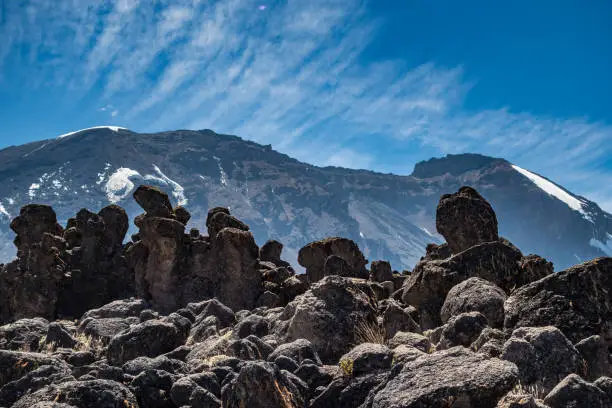
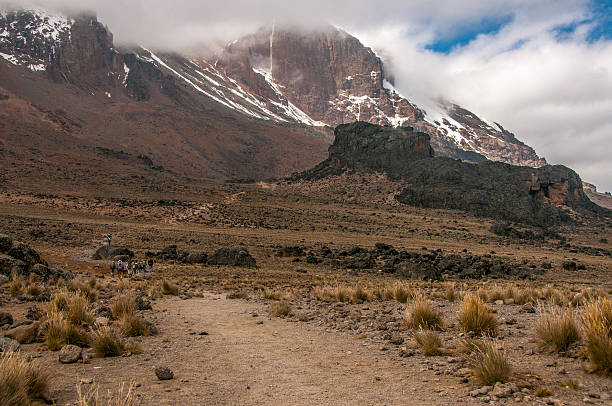
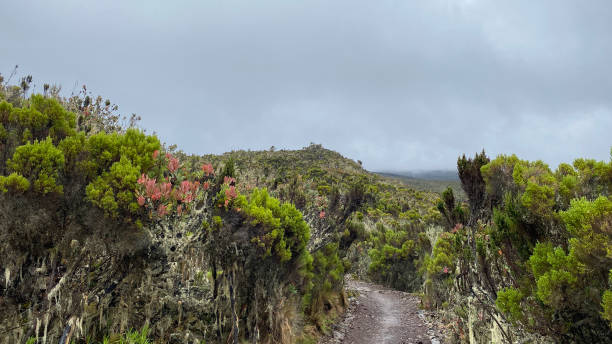
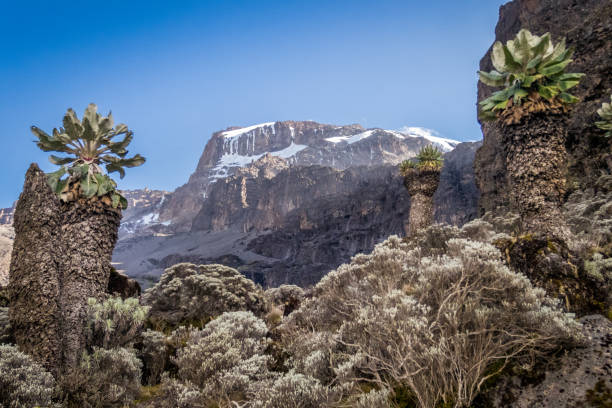
Marangu Route Photo Gallery
Marangu Route Price Calculator
Pick your package and climbers — every rate below is per person, exactly as quoted by our team.
Total = per-person rate × number of climbers. No hidden fees. Your fixed written quote — with dates, group size and inclusions — is confirmed on booking.
Climbing Cost Includes
Everything below is covered in your Marangu package — the price you see is the climb you get.
All Park Fees
Kilimanjaro National Park entry, hut, conservation and rescue fees are fully covered in your package — no gate surprises, ever.
Hut Accommodation
Dormitory bunks with mattresses at Mandara, Horombo and Kibo Huts — dry shelter every night, the Marangu signature.
All Meals + Treated Water
Breakfast, lunch and dinner freshly prepared by our mountain cook, plus treated safe drinking water all day, every day.
Guides, Cook & Porters
Licensed English-speaking guides, a mountain cook and a full crew — porters carry the loads so you carry only your daypack.
All Transfers
Moshi hotel to Marangu Gate and back, with airport transfers on packages that include them — confirmed with your booking.
Hotel Nights
Comfortable hotel stays before and after the trek on packages that include them — hot shower waiting at the bottom.
Briefing & Support
Pre-climb briefing, equipment checks and a team on call from booking to summit certificate — including vegetarian, vegan and gluten-free meal plans on request.
Rescue Fee & Mountain Safety
Rescue fees are covered and mountain safety support rides with every climb — health checks, pacing and descent decisions handled by professionals.
Accommodation Before & After
Hotel nights before and after the trek on packages that include them — confirmed with your booking, hot shower waiting at the bottom.
Government Taxes & Fees
All government taxes and applicable fees included in the package — the price you see is the climb you get, no gate surprises.
Climbing Cost Excludes
Honest extras to budget for — nothing hidden, nothing surprising at the gate.
International Flights
Flights to and from Kilimanjaro International Airport are not included — we happily advise on routings.
Tanzania Visa Fees
Visa costs are paid by the traveller; most nationalities can obtain one on arrival or online in advance.
Travel Insurance
Mandatory high-altitude trekking cover is not included — it must cover helicopter rescue up to 6,000 m.
Personal Equipment
Sleeping bag, poles and personal layers are not included — quality rental is available in Moshi, confirmed before you travel.
Crew Tips
Tips for guides, cook and porters are not included but warmly recommended — your briefing explains the custom.
Alcoholic Drinks
Alcohol is excluded on the mountain — altitude and alcohol do not mix.
Extra Snacks
Personal favourite snacks beyond our trail food are yours to bring — energy bars travel well.
Personal Expenses
Souvenirs, extra hotel nights, laundry and anything of a personal nature stay yours.
Join a Marangu Group Climb
Share the trail, the costs and the sunrise — group departures run in every season, on both 5-day and 6-day itineraries.
How group joining works
Tell us your dates and we match you with fellow climbers on the same Marangu itinerary — same huts, same professional crew, shared costs. Solo travellers welcome; you will never be forced into a date that does not suit you.
Group size, departure grouping and your guide team are confirmed in writing at booking — never assumed on this page. From $1,500 per person.
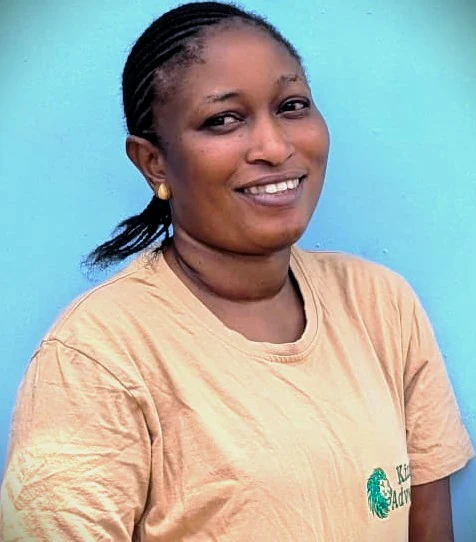
Want to plan a memorable Tanzanian adventure? Message Maria directly — Marangu dates, group sizes, prices and preparation, answered fast by someone who plans these climbs every day.
Chat on WhatsAppWhat Kilimanjaro Climbers Say About Kizza Adventures
Real words from real summits — verified reviews from our Kilimanjaro climbers. Read them all on our TripAdvisor page.
Verified TripAdvisor rating
“Hello everybody, so i booked the marangu route in 5 days with this organization. I got an nice prize from 1400$ excluded tip. i asked some other hikers to the top what they paid and noone paid less. Devocatus Laurent/Kizza is a well organized selfmade man who knows, how to deal with luggage problems and so on. i hiked with john and his english is absolutely fine! I think he knows the hole mountain, like nearly every porter other guid or cook knows him. He evaluates my skills perfectly and always give me the time I need for breaks, photos or whatever. If you want a company with a lower prize and a guid with extra safety these two should be yours! thank you so much or asante sana”
“I recently completed a private trek on the Marangu Route to the summit of Mount Kilimanjaro with Kizza Adventures, and it was an unforgettable experience! From start to finish, Kizza Adventures exceeded all my expectations.
Organization & Communication: From the very first inquiry, Kizza Adventures demonstrated exceptional professionalism. Their communication was clear and prompt, making the booking process smooth and hassle-free. They provided all the necessary information and helped me prepare for the trek, ensuring I had everything I needed for a safe and enjoyable climb.
The Guides & Support Staff: Our head guide, Joseph, was incredibly experienced and knowledgeable, guiding us with skill and confidence throughout the entire trek. His attention to our safety and well-being was outstanding. The team of porters and assistant guides were equally amazing, always making sure we had everything we needed, from hot meals to ensuring we stayed hydrated and comfortable. Their warmth, kindness, and genuine care made the journey even more memorable.”
“Unmatched Support On The Marangu Route. Climbing Kilimanjaro Via The Marangu Route Was Smooth Thanks To Kizza Tours. The Team's Encouragement, Medical Checks, And Delicious Meals Made A Huge Difference. I Reached The Summit With Ease And Felt Safe Throughout”
Marangu Route — Frequently Asked Questions
Everything you need to know before you go.
Marangu is widely known as the “Coca-Cola Route,” a nickname associated with its long-standing popularity among climbers. Unlike routes where trekkers sleep in tents, Marangu provides mountain huts along the trail, making it a distinctive option for those who prefer fixed accommodation during the climb.
The journey offers changing scenery as you gain altitude, with opportunities to experience Kilimanjaro’s unique vegetation, mountain landscapes, and the challenge of trekking toward Uhuru Peak at 5,895 metres (19,341 feet) above sea level.
The trek becomes more demanding as you gain altitude, especially on summit night, when you hike toward Uhuru Peak. You do not need to be an athlete, but being comfortable with long walks, uphill hiking, and several hours of physical activity will help you enjoy the experience. Regular walking, stair climbing, and hiking before your trip are good ways to prepare.
As experienced Kilimanjaro guides, we at Kizza Adventures keep a steady pace, encourage climbers to listen to their bodies, and check how everyone is feeling throughout the climb. Our aim is to help you feel prepared, supported, and confident as you make your way up the mountain. With the right preparation and guidance, the Marangu Route can be a rewarding adventure for first-time climbers as well as experienced hikers.
At Kizza Adventures, we welcome first-time climbers and help them prepare for the journey with practical advice on fitness, clothing, and what to expect on the mountain. Our experienced mountain guides walk with you at a steady pace, offer encouragement along the way, and monitor how you are feeling as you gain altitude.
If this is your first high-altitude trek, start preparing early with regular walks, uphill hikes, and stair climbing. You do not have to be an expert hiker, but you should be ready for several days of walking and understand that everyone adjusts to altitude differently. With good preparation and guidance from our team, beginners can take on the Marangu Route with greater confidence.
The 5-day itinerary is shorter and involves a quicker ascent, while the 6-day itinerary includes an extra day to help your body adjust to the altitude. For many climbers, allowing more time to acclimatize can improve their chances of reaching the summit, although success can never be guaranteed.
As experienced Kilimanjaro guides, we help you understand the differences between the two options so you can make an informed choice. Remember to allow additional time for arrival, the pre-climb briefing, and your journey after descending from the mountain.
Reaching the summit depends on more than physical fitness alone. Your preparation before the climb, walking pace, rest, hydration, and individual response to altitude all play an important role. Even people who exercise regularly may need more time to adjust to the mountain environment.
At Kizza Adventures, our experienced Kilimanjaro guides accompany you throughout the trek, maintain a suitable pace, and monitor how you are feeling as you gain altitude. We also encourage climbers to communicate openly with their guides so that any concerns can be addressed promptly.
Our recent record backs this up: across 2025–2026, 158 of our 175 Marangu climbers reached Uhuru Peak — a 90.3% success rate (2025: 90 of 100; 2026 season still in progress: 68 of 75). See the full breakdown in our success rate table.
The huts have shared sleeping rooms with bunk beds and basic mattresses. Climbers sleep alongside other trekkers, so you should expect a communal mountain environment rather than a private hotel room. Shared toilets are available at the huts, while facilities and comfort levels vary depending on the camp. The accommodation is simple and practical, designed to provide shelter in the mountain environment.
You will also find communal areas where climbers can sit, eat, and relax before the next day’s trek. Although the huts offer more protection from the weather than tents, nights can be very cold at higher elevations, so a suitable sleeping bag and warm clothing are essential.
Our Kizza Adventures team will guide you through what to expect at each overnight stop and help you prepare for a comfortable stay on the mountain. If you prefer hut accommodation to sleeping in a tent, the Marangu Route is an option worth considering.
At Kizza Adventures, our experienced mountain guides monitor climbers throughout the trek and provide support when someone is struggling with fatigue or the effects of altitude. If you need to stop before reaching the summit, your guide will explain the available options and arrange a safe descent when necessary. Depending on your condition and the circumstances, you may descend with a guide or designated team member while the rest of the group continues, where this can be arranged safely.
Not reaching the summit does not mean your climb has been a failure. Climbing Kilimanjaro is a significant achievement in itself, and every climber responds differently to altitude. Our team will support you throughout the experience and help you focus on enjoying the journey while making safe decisions along the way.
The package also includes mountain crew support and applicable rescue fees, according to the package terms. Transfers between your hotel and the mountain gate may also be included, depending on your booking arrangements. Before your climb, our team will clarify what is covered in your selected package so you know what to expect.
International flights, travel insurance, personal trekking equipment, equipment rental, tips for the mountain crew, and personal expenses are generally excluded unless specifically stated in your package. At Kizza Adventures, we encourage every climber to confirm the inclusions and exclusions of their chosen 5-day or 6-day Marangu Route package before booking, helping you plan your budget with confidence and avoid unexpected costs.
Your main essentials include moisture-wicking base layers, fleece or insulated jackets, waterproof trousers and a jacket, hiking socks, gloves, a warm hat, and a sun hat. Bring well-fitted hiking boots that you have already worn on training walks, as well as a comfortable daypack, a headlamp for summit night, sunglasses, sunscreen, a reusable water bottle or hydration system, and personal toiletries. A warm sleeping bag suitable for below-freezing temperatures is also important for overnight stays in the mountain huts.
If you are travelling from abroad or missing some equipment, ask our Kizza Adventures team about available gear rental before your climb. We can guide you on what to bring from home, what you may be able to rent locally, and how to pack your equipment so you are ready for the trek without carrying unnecessary weight.
Meals generally include a combination of carbohydrates, vegetables, fruit, and protein to support you during long hiking days. We understand that climbers have different dietary needs, so if you are vegetarian, vegan, or have food allergies or other dietary requirements, please inform us before your trip. Our team can discuss suitable meal arrangements in advance.
Drinking water is provided during the climb, and staying hydrated is important as you gain altitude. Your guides will remind you to drink regularly throughout the day. Bring a reusable water bottle or hydration bladder so you can carry enough water while hiking. If you have specific dietary needs or questions about drinking-water arrangements, let Kizza Adventures know when booking so we can help you prepare.
At Kizza Adventures, we usually recommend these periods to climbers who want to enjoy the mountain in relatively favourable weather. January and February often bring warmer conditions, while June to October is a popular climbing season with generally drier weather. However, temperatures drop significantly at higher elevations, and mountain weather can change at any time, even during the dry season.
You can also climb the Marangu Route during the rainy seasons, particularly in April and May, although you should be prepared for wetter trails, more cloud cover, and a greater chance of rain. November can also bring short rains. If your travel dates are flexible, our Kizza Adventures team help you choose a suitable climbing period based on your preferences, schedule, and the conditions you are likely to encounter.
Website: https://www.kizzaadventure.com/
Email: kizzaadventures@gmail.com
WhatsApp: +255 623 524 929.
Let us know your preferred travel dates, group size, and whether you are interested in the 5-day or 6-day Marangu Route package.
Our team will help you review the available package, explain what is included, and answer any questions you may have before confirming your booking. Once you agree on the arrangements, we will guide you through the reservation and payment process and share the information you need to prepare for your climb.
We recommend booking several months in advance, especially if you plan to climb during the popular January-February or June-October seasons. This gives you more time to arrange international flights, travel insurance, accommodation, and trekking equipment. If your dates are approaching, you can still contact us to check availability and discuss your options.
Every Marangu Route Package We Offer
Private climbs, group joins, luxury treks, day hikes and extended itineraries — all ten Marangu ways to the roof of Africa, each with fixed per-person pricing confirmed on booking.
Private Marangu 5-Day
Private Marangu 6-Day
Group Join Marangu 5-Day
Group Join Marangu 6-Day
Marangu 5-Day Climb
Marangu 6-Day Climb
Luxury Marangu 5-Day
Luxury Marangu 6-Day
Marangu Day Hike
7-Day Marangu Climb
Planning Your Tanzania Adventure
Everything you need to prepare for your Kilimanjaro climb and Tanzania trip — visas, vaccines, flights, hotels, insurance and packing, explained by the Moshi-based team that has guided 1,600+ climbers up this mountain. Read a card, then message us free on WhatsApp if anything is unclear.
Ready to plan your next adventure?
Tell us your ideas, and we’ll craft a personalized travel itinerary and reply within short time.
Ready to Climb the Marangu Route?
Speak with a local Kilimanjaro expert today. Get a free, custom itinerary in under 24 hours.