


Kilimanjaro Northern Circuit Overview — The Best Complete Guide to Climbing Mount Kilimanjaro
The complete Northern Circuit guide — Kilimanjaro’s longest trek, sweeping from Londorossi rainforest across the Shira Plateau and all the way around the remote northern slopes — Moir, Buffalo, Third Cave, School Hut — before the summit push on Uhuru Peak (5,895 m). Compare 8-day vs 9-day itineraries (plus 10- and 11-day expeditions), difficulty, the 90–95% success story, altitude and acclimatization, cost, best time to climb, maps, expert tips and booking advice.
What is the Northern Circuit Route?
The Northern Circuit is the longest established trekking route on Mount Kilimanjaro — the full grand tour. It begins at Londorossi Gate in the west, follows the Lemosho approach through rainforest and across the Shira Plateau, then breaks north around Kibo’s remote northern slopes — Moir, Buffalo, Third Cave — before approaching the summit from the east via School Hut and Gilman’s Point, and descending via Mweka. Nothing else on the mountain covers this much ground.
Length is the whole point: 8 to 11 days of walking gives your body the most gradual altitude exposure available, which is exactly why the Circuit posts the highest summit success rates on Kilimanjaro (around 90–95% estimated on the 9-day). The price is time, cost and cumulative fatigue — every extra day is another day of camp life, another day of walking, another day of mountain weather.
The 9-day itinerary is our recommendation for climbers with the time and budget: the full northern traverse at a humane pace, the famous acclimatization profile, and the quietest camps on Kilimanjaro. Short on days? The 8-day compresses the same circuit. Dreaming bigger? 10- and 11-day expeditions add Crater Camp and arrival handling.
Why Choose the Northern Circuit Route?
Highest Success Rates
Around 90–95% estimated on the 9-day — the longest acclimatization runway on Kilimanjaro converts directly into summits. Time is the one input money reliably buys here.
Quietest Camps
Moir, Buffalo and Third Cave see a handful of groups where Barranco sees dozens. If solitude is the dream, the northern slopes deliver it for days at a time.
Complete Mountain Tour
Rainforest, plateau, northern wilderness with Kenya views, the Saddle, crater rim, summit, southern descent — every face and zone of Kilimanjaro in one trek. Nothing repeats.
Gentlest Gradients
No Barranco Wall drama, no brutal ridges — the Circuit trades steepness for distance. Knees and lungs both prefer it to Umbwe or Machame.
Most Expensive
More days means more park fees, crew wages and food — the Circuit costs more than any shorter route at the same service level. Budget $2,000–$3,400 per person.
Longest Commitment
Eight days minimum, eleven at the full expedition end — plus travel days. Fitness must be endurance fitness: the ability to keep walking well on day nine, not just day two.
Complete Northern Circuit Overview
Our Guides' Verdict on the Northern Circuit
Straight talk from the team that climbs it every month — which length to book, and who should skip the short one.
1,600+ climbers guided on Kilimanjaro
The Circuit is the route our guides recommend when a climber has the days and the budget — with one condition attached: respect the distance. Nine days of walking is an expedition, not a holiday trek; cumulative fatigue on day seven ends more attempts than altitude ever does. Arrive endurance-fit, take the 9-day, and the mountain’s longest runway carries you to the top.
- Book 9 days for your best odds. The full northern traverse at a humane pace — Moir, Buffalo, Third Cave, School Hut — is what posts the 90–95% estimates. Eight days works; nine days works better.
- 8 days is the honest minimum. Fit trekkers with hill fitness do well on eight; it keeps the essential acclimatization spine while saving a day’s cost. Below eight, you are on the wrong route.
- Consider 10–11 days for the full expedition. Crater Camp at 5,730 m, arrival handling, maximum margin — for milestone climbs, honeymoons and anyone who wants Kilimanjaro with nothing rushed.
- Enjoy the quiet — it lasts for days. The northern slopes see a handful of groups where the southern trails see dozens. Moir, Buffalo and Third Cave are the most peaceful camps on Kilimanjaro.
- Rainy season? Still walkable. The northern slopes can run drier than the south — with good gear, March–May and November trek beautifully and quietly. No month guarantees anything; prepare for everything.
- Climb it in the dry months if you can. June–October and January–March give the kindest skies for Barranco Wall photos and summit sunrise.
Climb with a Moshi-based team that briefs you the night before, walks every step with you, checks your health twice daily on the mountain, and meets you at Mweka Gate with your summit certificate. Message us on WhatsApp with your dates and trekking background — we will tell you honestly whether the 8, 9, 10 or 11-day Circuit is your expedition — or whether Lemosho 8 days serves you better for less.
Northern Circuit — Day-by-Day Itinerary
The full 9-day and 8-day itineraries with hiking times, distances, elevations and camp photos — pick your trek length below. Our guides recommend 9 days; 10- and 11-day expeditions available on request.
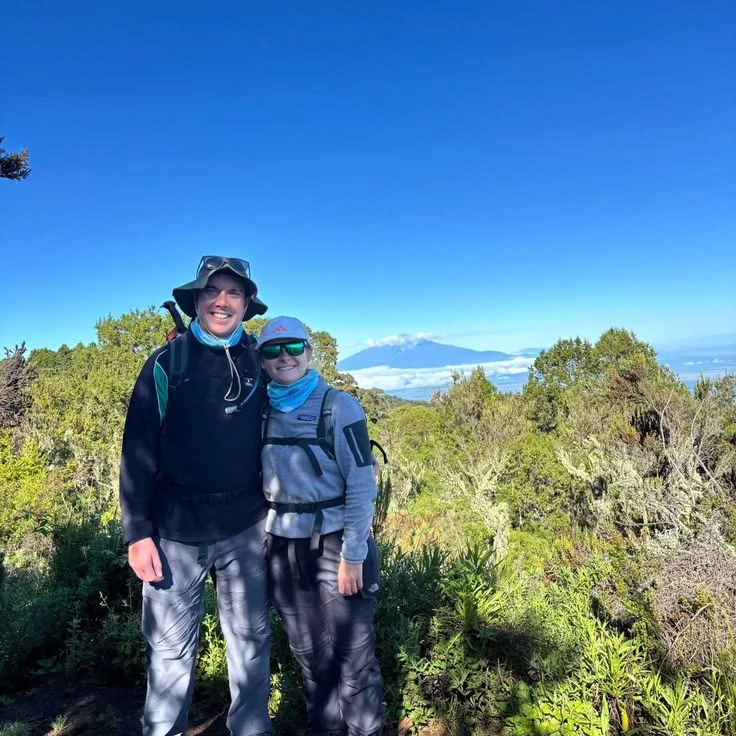
After breakfast in Moshi the team transfers you to Londorossi Gate for registration and park formalities, then on to the trailhead where the adventure begins. The trail winds through lush montane rainforest beneath towering trees — colobus monkeys and turacos for company — climbing gradually all afternoon.
Approximately 6 km and 3–4 hours brings you to Mti Mkubwa (Big Tree) Camp at around 2,650 m, where the crew has dinner and tents ready. The gentlest possible start to the longest route — exactly as it should be.
Evening briefing, early night. Nine days of walking starts with one easy forest afternoon.
- Accommodation: Mti Mkubwa Camp (approx. 2,650 m)
- Meals: Breakfast, lunch, dinner
- Trekking time: Approximately 3–4 hours
- Trekking distance: Approximately 6 km
- Altitude: From 2,100 m to approx. 2,650 m
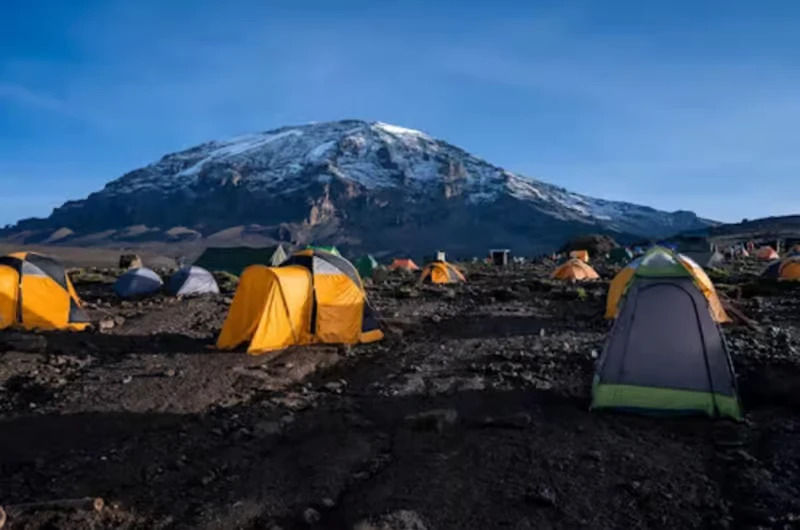
Out of the forest and into the heath and moorland zones — giant heather, volcanic rock, opening skies. The trail crosses the Shira Ridge and descends gently onto the plateau toward Shira 1 Camp, with first Kibo views on clear days.
Approximately 8 km and 5–6 hours of steady climbing to 3,610 m. A proper first mountain day: legs wake up, lungs notice the altitude, appetite does the talking at dinner.
Rest at camp, hydrate, sleep. The plateau crossing starts tomorrow.
- Accommodation: Shira 1 Camp (approx. 3,610 m)
- Meals: Breakfast, lunch, dinner
- Trekking time: 5–6 hours
- Trekking distance: Approximately 8 km
- Altitude: From 2,650 m to approx. 3,610 m
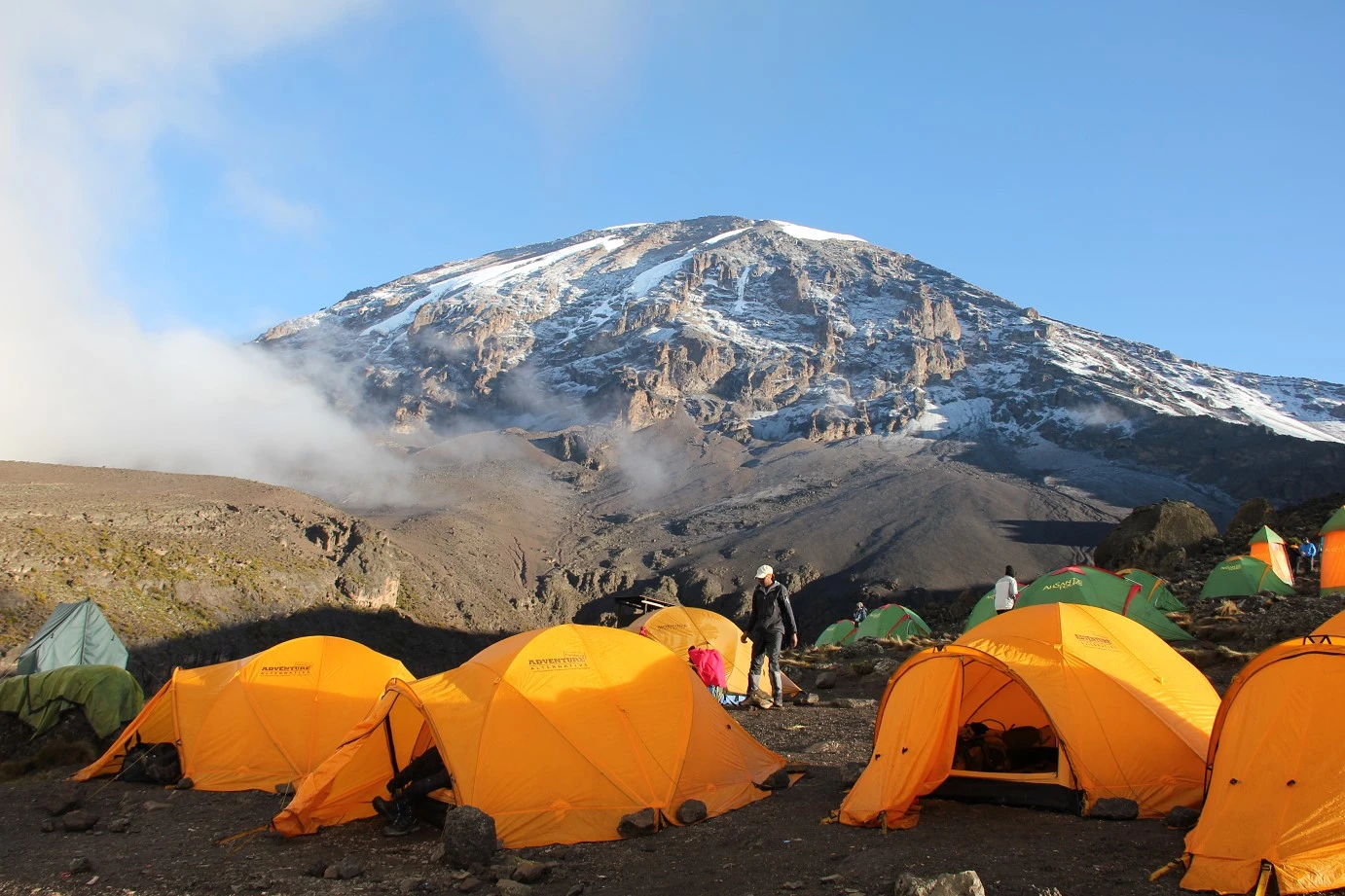
A short, beautiful stage across the Shira Plateau — open moorland, Kibo views, volcanic formations and high-altitude gardens. Approximately 7 km in 3–4 hours at a comfortable pace, with the guide watching how everyone handles the new altitude.
Arrive at Shira 2 Camp (3,850 m) with most of the day left: rest, lunch, photographs, water, and an early night. Short days like this are the Circuit’s secret — effort banked, not spent.
Dinner and overnight at Shira 2. Tomorrow the route turns north to Moir.
- Accommodation: Shira 2 Camp (3,850 m)
- Meals: Breakfast, lunch, dinner
- Trekking time: 3–4 hours
- Trekking distance: Approximately 7 km
- Altitude: From 3,610 m to 3,850 m
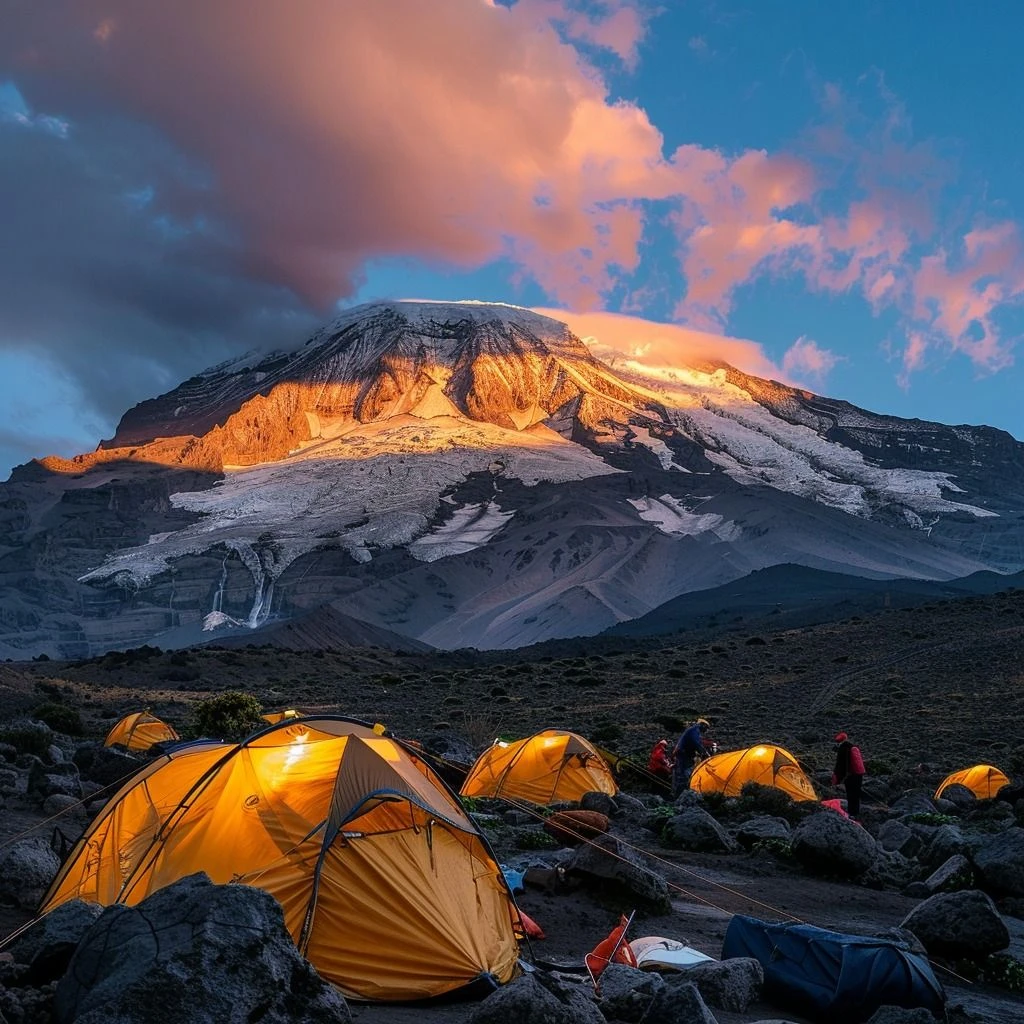
Leave Shira 2 and climb gradually across open terrain toward the northern side — dramatic Kibo views, rugged high slopes, and finally Moir Hut near the Lent Hills. Approximately 9 km and 5–7 hours through the moorland–alpine transition.
Depending on conditions, the guide may add an optional acclimatization walk near camp. Afternoon rest, hydration and preparation: the remote northern traverse starts tomorrow, and crowds end here.
Dinner and overnight at Moir Hut (4,200 m).
- Accommodation: Moir Hut (4,200 m)
- Meals: Breakfast, lunch, dinner
- Trekking time: 5–7 hours
- Trekking distance: Approximately 9 km
- Altitude: From 3,850 m to 4,200 m
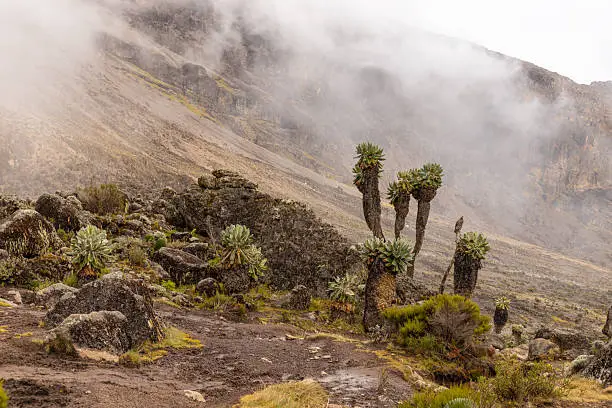
Out of the Moir Valley and onto the remote northern slopes — ridges, rolling terrain, Kenya plains shimmering north on clear days. The longest walking day so far at about 12 km and 5–7 hours, taken at a steady pace with regular breaks.
This is the quietest Kilimanjaro there is: no crowds, no fixed camps of other routes, just wilderness and the mountain’s north face. Arrive at Buffalo Camp (4,020 m) for dinner and vast evening views.
Overnight at Buffalo Camp.
- Accommodation: Buffalo Camp (4,020 m)
- Meals: Breakfast, lunch, dinner
- Trekking time: 5–7 hours
- Trekking distance: Approximately 12 km
- Altitude: From 4,200 m to 4,020 m
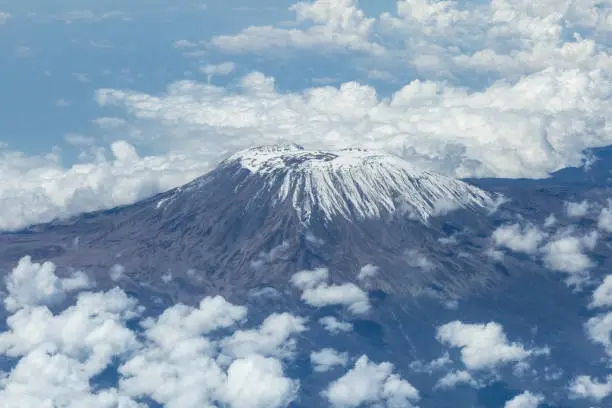
Eastward across the northern slopes — open valleys, rocky hillsides, the north face of Kibo filling the sky. Approximately 8 km and 4–6 hours of gentle ups and downs at a manageable pace, descending overall to Third Cave Camp (3,870 m).
A recovery-flavoured day by Circuit standards: sleep lower than the last two nights while staying high. Crew prepares meals, you prepare for the Saddle crossing tomorrow.
Dinner and overnight at Third Cave Camp.
- Accommodation: Third Cave Camp (3,870 m)
- Meals: Breakfast, lunch, dinner
- Trekking time: 4–6 hours
- Trekking distance: Approximately 8 km
- Altitude: From 4,020 m to 3,870 m

Climb toward the Saddle between Kibo and Mawenzi — increasingly barren, lunar terrain, steady uphill all the way. Approximately 5–6 km and 4–5 hours to School Hut at around 4,800 m.
Afternoon: warm meal, rest, summit briefing, equipment check, early bed. Everything tomorrow depends on tonight’s discipline — hydrate, eat, sleep.
Overnight at School Hut. The summit push starts at midnight.
- Accommodation: School Hut (approx. 4,800 m)
- Meals: Breakfast, lunch, dinner
- Trekking time: 4–5 hours
- Trekking distance: 5–6 km
- Altitude: From 3,870 m to approx. 4,800 m

Around midnight the summit attempt begins from School Hut — slowly toward the crater rim via Gilman’s Point, then along the rim to Uhuru Peak (5,895 m) (5,895 m / 19,341 ft). Cold, dark, thin air — and then sunrise over Africa from its rooftop. Photos, celebration, then descend promptly.
Down past Barafu for rest, then all the way to Mweka Camp (3,100 m): 16–20 km and 10–15 hours in total, the longest day of the longest route. Poles save knees; guides set the pace.
Dinner and overnight at Mweka Camp. Certificates (gold for Uhuru, green for Gilman’s) tomorrow at the gate.
- Accommodation: Mweka Camp (3,100 m)
- Meals: Breakfast, lunch, dinner
- Trekking time: Approximately 10–15 hours
- Trekking distance: Approximately 16–20 km
- Altitude: Uhuru Peak 5,895 m; sleep at 3,100 m
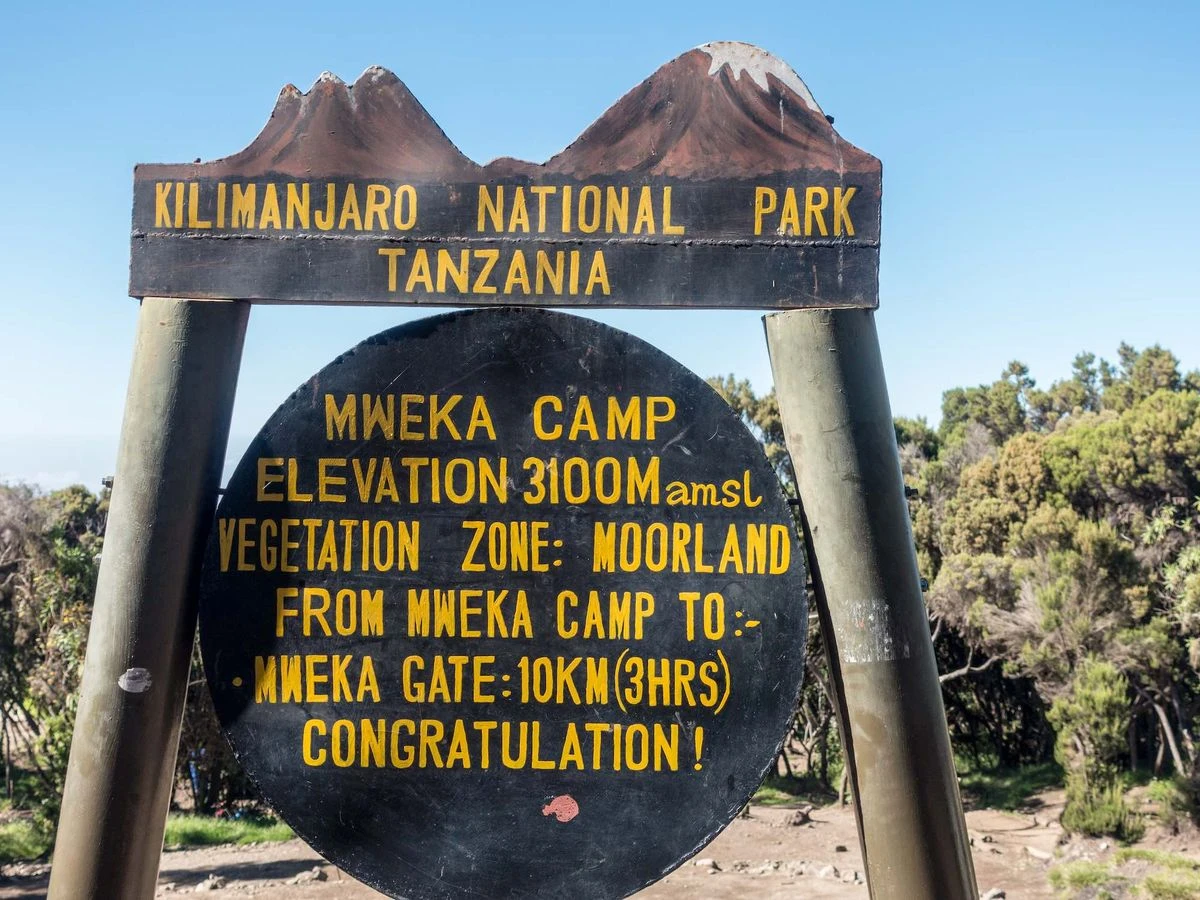
After breakfast descend through lush montane rainforest — towering trees, birdsong, thick warming air — to Mweka Gate (1,640 m) in 3–5 hours over about 10 km. Sign out, receive your certificate, thank the crew.
Transfer to Moshi for lunch, hotel, shower and rest. Buffer one night before any flight or safari — nine days deserves a slow morning after.
End of the grand tour. Karibu tena.
- Accommodation: Moshi hotel
- Meals: Breakfast and lunch
- Trekking time: 3–5 hours
- Trekking distance: Approximately 10 km
- Altitude: From 3,100 m to 1,640 m
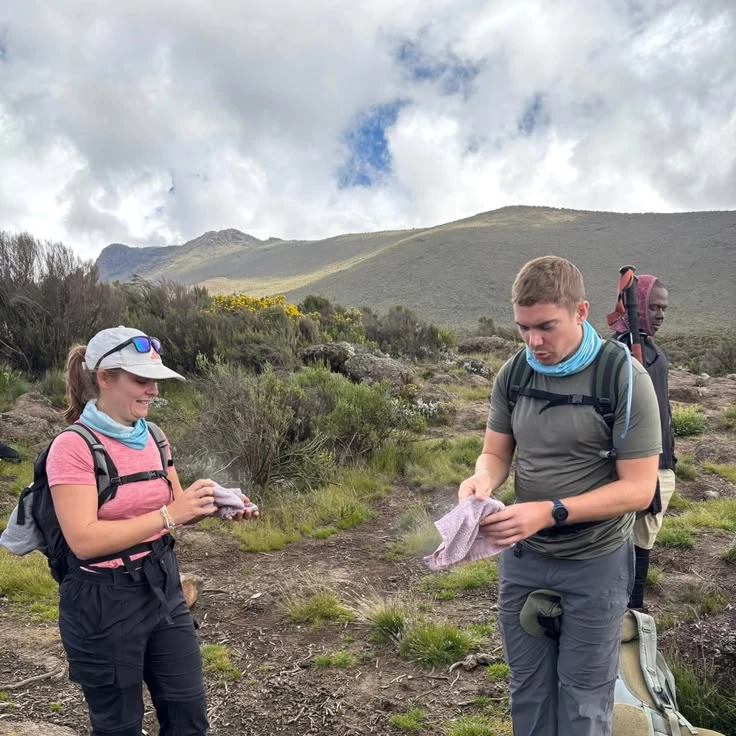
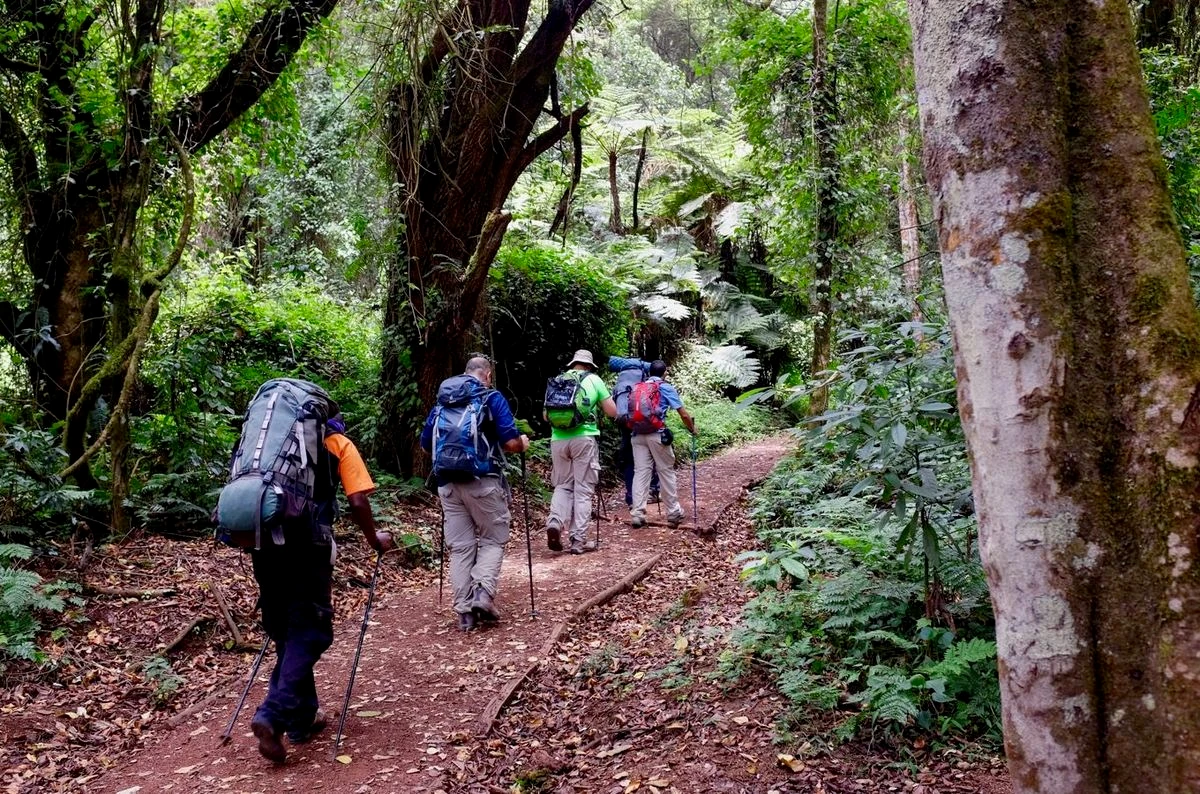
Northern Circuit Campsites
The Northern Circuit is a camping-only route — no huts. Here are the campsites you’ll sleep at.
Mti Mkubwa Camp (2,650 m)
Elevation: 2,650 m
Terrain: Forest clearing
Facilities: Tent platforms, basic toilets
Water: Stream water (treated)
Night one beneath the Big Tree — birdsong, moths around the mess-tent lamps, and the easiest walking of the whole trek.
Shira 1 Camp (3,610 m)
Elevation: 3,610 m
Terrain: Open moorland plateau
Facilities: Tent platforms, basic toilets
Water: Stream water (treated)
First Kibo views and first thin air. The plateau’s big skies start here.
Shira 2 Camp (3,850 m)
Elevation: 3,850 m
Terrain: Open moorland plateau
Facilities: Tent platforms, basic toilets
Water: Stream water (treated)
A short-stage camp with a long-view afternoon — rest banked early on the expedition.
Moir Hut (4,200 m)
Elevation: 4,200 m
Terrain: Sheltered northern valley
Facilities: Tent platforms, basic toilets
Water: Stream water (treated)
The quiet turn north — Lent Hills, thin crowds, first 4,000 m sleep. Optional acclimatization walks nearby.

Buffalo Camp (4,020 m)
Elevation: 4,020 m
Terrain: Remote northern slopes
Facilities: Tent platforms, basic toilets
Water: Stream water (treated)
Vast wilderness camp with Kenya plains on the horizon. The most remote night of the trek.
Third Cave Camp (3,870 m)
Elevation: 3,870 m
Terrain: Open northern valleys
Facilities: Tent platforms, basic toilets
Water: Stream water (treated)
Sleeping lower after two high nights — recovery by design while staying high.
School Hut (4,800 m)
Elevation: 4,800 m
Terrain: Saddle, barren rock
Facilities: Tent platforms, basic toilets
Water: Carried water only
Final camp before the summit: briefing, kit check, early bed. Everything depends on tonight’s discipline.
Mweka Camp (3,100 m)
Elevation: 3,100 m
Terrain: Upper forest clearing
Facilities: Tent platforms, basic toilets
Water: Stream water (treated)
The celebration camp after summit day — thick air, deep sleep, certificates tomorrow.
Understanding Altitude on the Northern Circuit
Nine days of gradual gain beats every shortcut. Knowledge is your best defence.
Altitude sickness (AMS) is still the main reason Circuit attempts fail — but the 9-day profile is the kindest on Kilimanjaro: short stages early, a rest shaped into every second day, sleep-highs that rarely jump more than 500 m, and a full week above 3,500 m before the summit push. That architecture is exactly what the 90–95% estimates are built on.
Pole pole for nine days straight is harder than it sounds — cumulative fatigue tempts fast walking on easy days. Don’t. Drink 4+ litres daily, eat even when appetite fades, report symptoms immediately. Guides check health twice daily and make all safety calls; a longer itinerary is margin, not immunity.
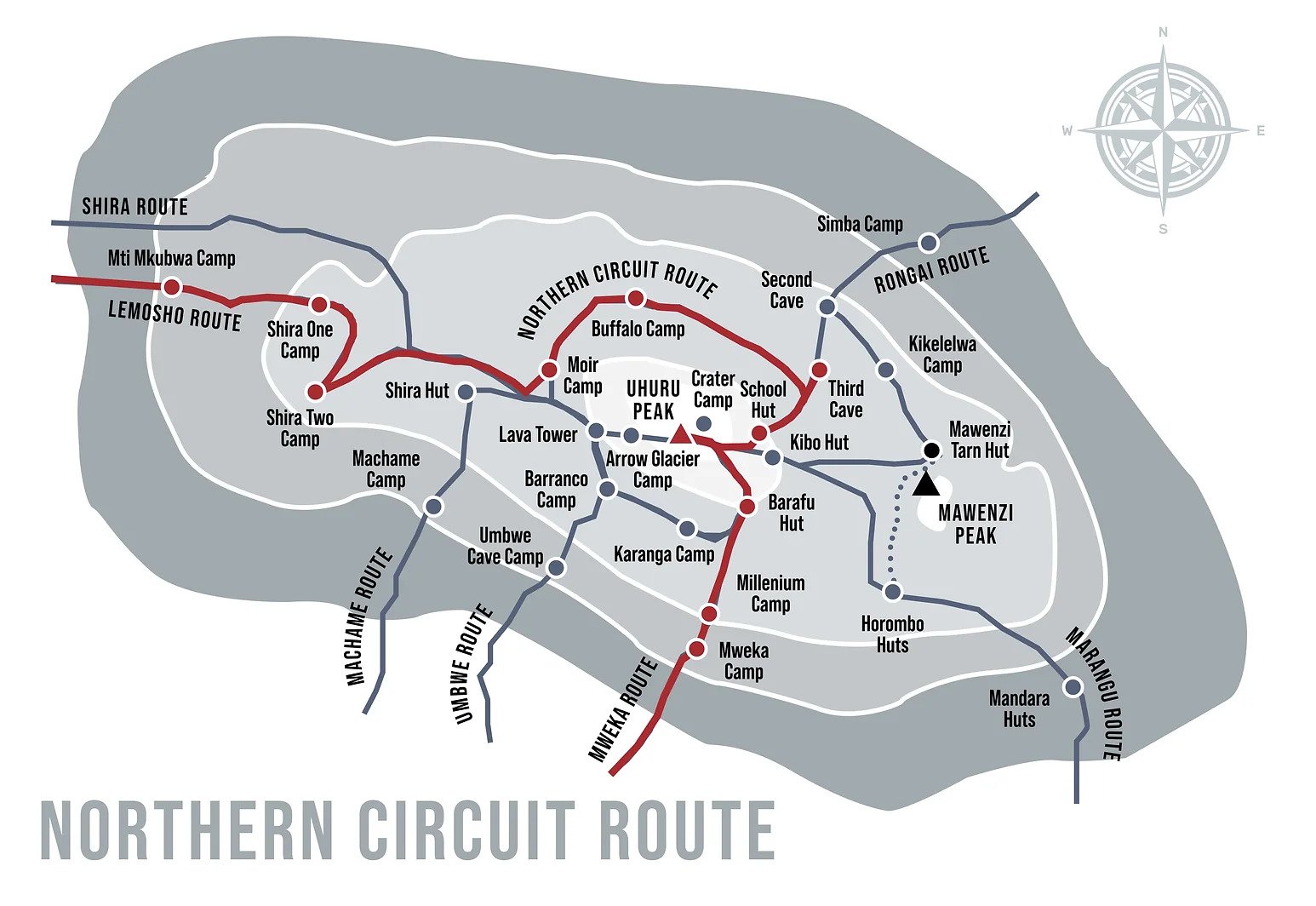
Northern Circuit Map & Trail Overview
Visualise the entire Northern Circuit from Londorossi around the north to the summit and down via Mweka.
How Hard Is the Northern Circuit Route?
The Northern Circuit is moderately difficult to strenuous — not because of any single hard day (there is no Barranco Wall, no brutal ridge, no extreme single push beyond the standard summit night), but because of accumulation: 90–98 km of walking, eight to eleven consecutive days on trail, cold camps for over a week, and a 10–15-hour summit day at the end of it all. Endurance beats strength here.
Who can climb? Fit, active trekkers comfortable walking 4–8 hours daily for over a week — including back-to-back 12 km days on the northern traverse. Previous multi-day trekking experience helps enormously; first-time Kilimanjaro climbers do very well on the 9-day provided they train for endurance, not just fitness. Technical skills are never required.
Training recommendation: 3–4 months building walking volume — regular 5–7-hour weekend hikes with a loaded pack, stairs, cardio base — plus back-to-back long days to rehearse cumulative fatigue. Break boots in thoroughly; blisters on day two of nine end treks.
Northern Circuit Summit Success Factors
The Northern Circuit is widely regarded as the highest-success route on Kilimanjaro: published operator estimates run approximately 90% to 95% or higher on the longer itineraries, particularly the 9-day. Figures vary by operator, sample size and measurement — they are not an official rate for every expedition — but the mechanism is undisputed: more days at altitude before summit night converts directly into summits.
At Kizza Adventures, we recommend the 9-day Circuit because its extended schedule buys the maximum acclimatization a standard itinerary can offer. Longer still (10–11 days with Crater Camp) adds margin for milestone climbs. But length is opportunity, not guarantee: altitude sickness, weather and individual physiology decide every summit, and our guides will turn anyone around the moment safety requires it.
Expert tip: The Circuit’s success is built in the middle days — Moir, Buffalo, Third Cave. Walk them well (slow, hydrated, fed) and summit night becomes a formality; race them and no profile saves you.
| Itinerary | Estimated Success | Acclimatization Profile | Who It Suits |
|---|---|---|---|
| 8-Day Circuit | High (below 9-day)* | Strong — compressed northern traverse | Fit trekkers short on time |
| 9-Day Circuit | ~90–95%+* | Best standard — full gradual traverse | Our pick for first-timers and summit odds |
| 10–11-Day Expedition | Maximum margin* | Crater Camp + arrival handling | Milestones, honeymoons, zero-rush climbs |
*Published operator estimates, varying by sample and method — not an official rate, never a promise for any individual climb. Fitness, pacing, hydration, weather and physiology all decide summits.
When Should You Climb the Northern Circuit?
The main drier periods — January to early March and June to October — are the most popular windows, with the best odds of clear trekking and big northern views. But an 8–11-day trek samples a lot of weather: rain, strong wind, cold and even snow can appear in any month, and the northern slopes’ relative dryness guarantees nothing.
June–October: Peak season. Most reliable conditions, coldest summit nights, busiest School Hut and summit. Book early.
January–March: Warmer, quieter, often superb visibility over the northern plains. A favourite for photographers.
April–May & November: The rains. Walkable with quality gear and flexible expectations — and the quietest Circuit of all — but prepare for wind, cold, rain and changing visibility every single day.
Ultimate Kilimanjaro Packing List
Everything you need to reach Uhuru Peak — download our free comprehensive packing guide.
Proper packing can mean the difference between a successful summit and a struggle. Kilimanjaro takes you through five climate zones — from warm rainforest at the base to freezing Arctic conditions at 5,895m. Our expert guides have created a complete packing checklist covering every layer, piece of gear, and essential item you'll need.
At Kizza Adventures, we review every climber's gear before departure to maximise safety and summit success.
View Full Packing ListPrintable page — open, then print or save as PDF.
How Much Does the Northern Circuit Cost?
The cost of climbing Kilimanjaro via the Northern Circuit with fixed per-person rates: Private 8-Day $2,250 · 9-Day $2,600 · 10-Day $2,900 · 11-Day $3,300 · Luxury 8-Day $2,350 · 9-Day $2,700 · 10-Day $3,000 · 11-Day $3,400 · Group Join 8-Day $2,000 · 9-Day $2,250 · 10-Day $2,400 · 11-Day $2,600. Every rate is per person. At Kizza Adventures, we offer transparent pricing with no hidden fees.
| Package | Price (USD) | Details |
|---|---|---|
| Private Northern Circuit — your own guide and crew | ||
| 8-Day Private Northern Circuit | $2,250 | Per person |
| 9-Day Private Northern Circuit | $2,600 | Per person |
| 10-Day Private Northern Circuit | $2,900 | Per person |
| 11-Day Private Northern Circuit | $3,300 | Per person |
| Luxury Northern Circuit — premium service and comfort | ||
| 8-Day Luxury Northern Circuit | $2,350 | Per person |
| 9-Day Luxury Northern Circuit | $2,700 | Per person |
| 10-Day Luxury Northern Circuit | $3,000 | Per person |
| 11-Day Luxury Northern Circuit | $3,400 | Per person |
| Group Join Northern Circuit — join fellow climbers | ||
| 8-Day Group Join Northern Circuit | $2,000 | Per person |
| 9-Day Group Join Northern Circuit | $2,250 | Per person |
| 10-Day Group Join Northern Circuit | $2,400 | Per person |
| 11-Day Group Join Northern Circuit | $2,600 | Per person |
| Park entrance fees | $200-300 | Included in package |
| Guide fees | $200-350 | Professional, certified guide |
| Porter fees | $150-250 | Full crew; you carry only a daypack |
| Camping fees | $200-300 | Per night at each camp |
| Meals on mountain | $150-250 | 3 meals + snacks daily |
| Transport (Moshi ⇆ Gate) | $50-80 | Round trip transfer |
| Equipment rental | $100-250 | Sleeping bag, poles, etc. if needed |
| Tips (guides + porters) | $200-400 | Recommended, not mandatory |
| Travel insurance | $50-100 | Must cover high-altitude trekking |
Why prices vary: Longer itineraries cost more (extra days of park fees, crew wages and food); group joins share costs; parties of 4+ earn private-group discounts. Luxury packages add premium service and comfort. Always check what’s included before booking — we pride ourselves on honest, transparent pricing — inclusions and exclusions spelled out before you book.
Northern Circuit vs Other Kilimanjaro Routes
How does the Northern Circuit compare to Kilimanjaro’s other climbing routes?
| Feature | Northern Circuit | Lemosho | Machame | Marangu | Rongai | Umbwe | Shira |
|---|---|---|---|---|---|---|---|
| ★ Our Pick | Longest | Best overall | Most popular | Easiest | Remote | Toughest | Quietest start |
| Difficulty | Moderate-Challenging | Challenging | Challenging | Moderate | Moderate | Very Challenging | Challenging |
| Days | 8-11 | 7-8 | 6-7 | 5-6 | 6-7 | 6-7 | 6-8 |
| Scenery | Excellent | Excellent | Excellent | Good | Good | Dramatic | Excellent |
| Crowds | Lowest | Moderate | High | High | Low | Lowest | Low early |
| Accommodation | Camping | Camping | Camping | Huts | Camping | Camping | Camping |
| Our Recommendation | Max acclimatization | Best overall | Best value | Beginners | Rainy season | Experienced only | Pre-acclimatized |
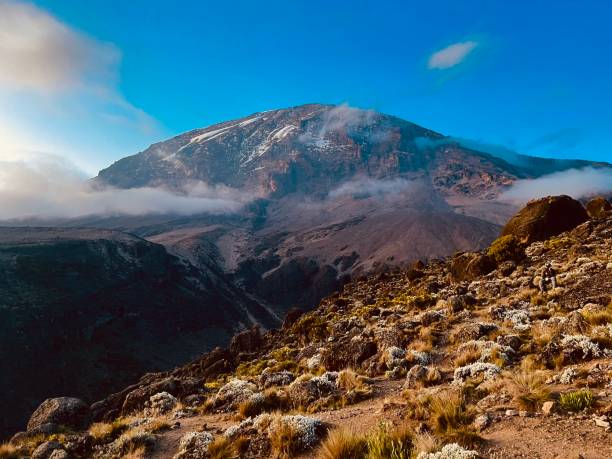
Northern Circuit Photo Gallery
Northern Circuit Price Calculator
Pick your package and climbers — every rate below is per person, exactly as quoted by our team.
Estimate only — your exact quote is confirmed in writing at booking. Get exact quote on WhatsApp →
Climbing Cost Includes
Everything below is covered in your Northern Circuit package — confirmed with your booking, never assumed on this page.
All Park Fees
Kilimanjaro National Park entry, camping, conservation and rescue fees are fully covered in your package — including government taxes and applicable fees. These charges make up a large share of any Kilimanjaro price and are the reason genuine climbs never cost a few hundred dollars. No gate surprises, ever.
Camping Fees & Arrangements
Designated campsites at Mti Mkubwa, Shira 1 & 2, Moir, Buffalo, Third Cave, School Hut and Mweka with quality tents pitched, arranged and struck by the mountain crew every day — plus a dining mess tent, sleeping mats and hot washing water at every camp.
Guides, Cook & Porters
Licensed English-speaking guides with Wilderness First Responder training, a mountain cook and a full crew of porters, waiters and camp managers. Porters carry tents, food and your duffel (weight limits briefed before departure) so you carry only a light daypack — and the crew's twice-daily health checks watch over you and your porters alike.
All Meals + Treated Water
Breakfast, lunch and dinner freshly prepared by our mountain cook — porridge and eggs at dawn, hot lunches on the trail, soups, stews and fresh fruit at night — plus treated safe drinking water all day, every day. Vegetarian, vegan, gluten-free and lactose-free plans cost nothing extra when you tell us at booking; expect 4+ litres a day at altitude.
All Transfers
Hotel to Londorossi Gate and back from Mweka Gate, with Kilimanjaro airport transfers on packages that include them — met on arrival by an English-speaking driver, confirmed with your booking.
Rescue Fee & Mountain Safety
Park rescue fees covered and genuine mountain safety on every climb: twice-daily medical check-ups with pulse oximeters, conservative descent decisions at the first warning signs, and evacuation support to Moshi hospital care if ever needed. Safety calls are the guide's alone — never a vote.
First-Aid Kit & Emergency Oxygen
A complete group medical kit on every climb — wound care, blister treatment, pain relief, altitude-sickness medication, splints and bandages — plus bottled emergency oxygen carried for genuine emergencies and administered at the first warning signs, not as a last resort.
Portable Toilet
A portable toilet tent, set up at each camp away from sleeping tents and serviced daily by the crew — confirmed with your booking.
Sleeping Bag
A warm mountain sleeping bag is included in your package — confirmed with your booking. Bring your own if you prefer; proper sleeping equipment matters because temperatures drop considerably at the higher camps.
Summit Certificate
Your official Kilimanjaro summit certificate — gold for Uhuru Peak, green for Stella Point and Gilman's Point — presented at Mweka Gate and a free lifetime souvenir of the roof of Africa.
Hotel Nights
Comfortable Moshi hotel stays with breakfast before and after the trek on packages that include them — hot shower, real bed, gear store and briefing room waiting at the bottom. Extra nights easily added.
Briefing & Support
Full pre-climb briefing the evening before — gear inspection item by item, route and weather review, health forms and emergency contacts — plus a team on call from booking to certificate, and free gear advice any time before you fly.
Climbing Cost Excludes
Honest extras to budget for — nothing hidden, nothing surprising at the gate.
International Flights
Flights to and from Kilimanjaro International Airport are not included.
Tanzania Visa Fees
Visa costs are paid by the traveller; e-visa available online in advance.
Travel & Medical Insurance
Mandatory high-altitude cover is not included — it must cover rescue up to 6,000 m.
Personal Equipment
Personal trekking equipment you bring yourself — boots, layers, poles and accessories — is not included; quality rental is available in Moshi. Sleeping bag is included — see above.
Crew Tips
Tips for guides, cook and porters are not included but warmly recommended.
Laundry Service
Laundry on the mountain and at hotels stays yours.
Alcoholic & Soft Drinks
Alcoholic drinks and hotel soft drinks are excluded — altitude and alcohol do not mix.
Join a Northern Circuit Group Climb
Share the trail, the costs and the summit sunrise — group departures run in every season, on 6- and 7-day itineraries.
How group joining works
Tell us your dates and we match you with fellow climbers on the same Northern Circuit itinerary — same route, same professional crew, shared costs. Solo travellers welcome; you will never be forced into a date that does not suit you.
Group joins from $2,000 per person (8-day) to $2,600 (11-day). Group size, departure grouping and your guide team are confirmed in writing at booking — never assumed on this page.
Plan With Maghret in Moshi
Real answers, fast, from the team that runs these climbs every week.
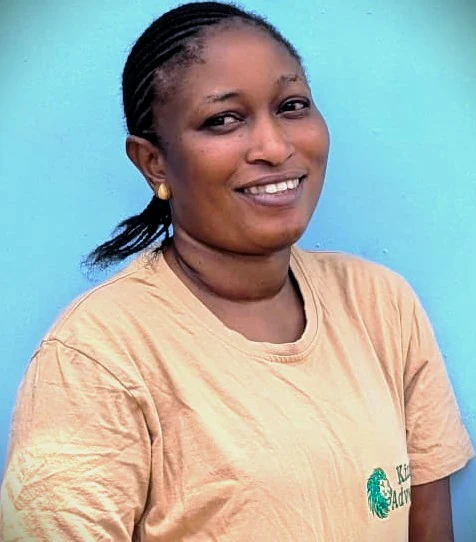
Want to plan a memorable Tanzanian adventure? Message Maghret directly — Northern Circuit dates, group sizes, prices and preparation, answered fast by someone who plans these climbs every day.
Chat on WhatsAppWhat Northern Circuit Climbers Say About Kizza Adventures
Unfiltered words from real Circuit summits — read every review on our public profiles below.
TripAdvisor
Photos, summit stories and honest ratings from climbers we guided — the full public record.
Read Reviews on TripAdvisor →Google Reviews
Star ratings and trip reports from our Circuit, safari and Zanzibar guests — updated daily.
Read Reviews on Google →Northern Circuit — Frequently Asked Questions
Twenty straight answers on the longest trek — everything else lives in the sections above.
The Northern Circuit is the longest established trekking route on Mount Kilimanjaro, offering an extensive journey around the mountain’s remote northern slopes. It begins on the western side at Londorossi Gate, follows the Lemosho approach across the Shira Plateau, and then continues north around Kibo before approaching the summit. The route is known for its panoramic scenery, quieter trails, and extended acclimatization opportunities.
At Kizza Adventures, we recommend the Northern Circuit to climbers who want a longer, more comprehensive Kilimanjaro experience. It is particularly suitable for travellers.
The Northern Circuit is typically completed in 8 to 11 days, depending on the itinerary. Some operators offer longer versions with additional acclimatization or rest days. The nine-day itinerary is a popular choice, as it allows climbers to traverse the northern slopes at a gradual pace before attempting the summit.
At Kizza Adventures, we generally recommend the nine-day itinerary for climbers who have enough time and wish to take advantage of the route’s extended acclimatization profile. Although extra days lengthen the expedition and can increase cost, they provide more time to adjust to altitude and experience the mountain’s landscapes. Compare our 8-day vs 9-day itinerary.
The Northern Circuit leads to Uhuru Peak at 5,895 metres (19,341 feet) above sea level, the highest point on Mount Kilimanjaro and the highest mountain summit in Africa. Reaching this elevation is physically demanding — oxygen is significantly lower than at sea level, with cold, fatigue and altitude effects to manage.
At Kizza Adventures, we emphasize that reaching Uhuru Peak requires more than strength: slow pace, eating and drinking well, following guide instructions, and reporting symptoms. The longer route gives more acclimatization time, but individual responses differ and the summit can never be guaranteed. See altitude guide.
The Northern Circuit is a moderately difficult to strenuous trek because of its length, cumulative walking demands, and high altitude. Most of the route follows established hiking trails rather than technical climbing terrain, but expect long trekking days, uneven ground, changing weather, and a demanding summit night. The total trekking distance is commonly estimated at around 90-98 kilometres, depending on the exact itinerary.
The main challenge is maintaining energy and adapting to altitude over consecutive days. Regular hiking, uphill training, cardiovascular exercise, and practice with a backpack help — see training advice and packing.
Yes, beginners can climb the Northern Circuit if they prepare well and can handle several days of high-altitude trekking. Previous mountaineering experience is not normally required because the standard route is non-technical. But the trek’s length means beginners should not underestimate the physical demands or assume a longer itinerary makes the climb easy.
At Kizza Adventures, we encourage first-time climbers to begin training several months out — long walks, hill training, suitable footwear, cardiovascular exercise — choose a realistic itinerary, listen to the guide, and understand that even fit beginners can experience altitude sickness.
Both approach from the west and share the rainforest and Shira Plateau trails. They differ once past the western side: Lemosho turns toward the southern circuit, while the Northern Circuit continues on a longer trail around the remote northern side of the volcano.
If you seek a complete circuit and have extra days, consider the longer Northern option; to save time while keeping beauty and summit margin, Lemosho works. Either way, proper acclimatization is critical — see route comparison.
The Northern Circuit is widely regarded as one of the Kilimanjaro routes with the highest summit success rates. Published operator estimates commonly range from approximately 90% to 95% or higher for longer itineraries, particularly the nine-day version. These figures vary by operator, sample size and measurement — not an official rate for every expedition.
At Kizza Adventures, we generally recommend the nine-day Circuit for its extended acclimatization. Longer can improve Uhuru odds, but never eliminates altitude sickness or guarantees individual success — health and safe return first, always. See success factors.
The nine-day itinerary is a strong option: western approach through rainforest and Shira Plateau, several days across the northern slopes, School Hut, summit attempt, Mweka descent. Exact camps and distances depend on the operator.
Compare days, overnight elevations, acclimatization opportunities and walking distances before choosing. Eight days suits limited time; nine days is less compressed — full detail in our day-by-day and guides’ verdict.
The Northern Circuit normally starts at Londorossi Gate in the west. After park entry, climbers travel to the trailhead, trek rainforest toward the Shira Plateau, circle the northern slopes, and approach the summit from the eastern side.
After the summit, descend via Mweka Camp to Mweka Gate in the south — a broad circuit, never a retrace. Confirm airport transfers, hotel nights and ground arrangements with us before booking — see trail overview.
A typical nine-day climb may include Mti Mkubwa, Shira 1, Shira 2, Moir Hut, Buffalo Camp, Third Cave Camp, School Hut, and Mweka Camp on the descent — progressing from western rainforest and plateau to remote northern slopes and the summit approach.
Review the camp schedule against the altitude profile before booking — overnight elevation drives acclimatization. Meet every camp in campsites.
The route crosses remote northern slopes where far fewer groups pass than on the popular southern trails — long open stretches, solitude, a different Kilimanjaro altogether after the western approach.
But quieter never means empty: shared camps and the summit see other groups, and crowds vary by season and operator. We promise a quieter route, never solitude — see the traverse.
Enormous variety: western rainforest, heathland, moorland, the open Shira Plateau, then broad northern highlands with views toward the plains of northern Tanzania and Kenya in good visibility — turning rocky and alpine toward the top, with summit snow, ice and glaciers by condition.
Scenery is the route’s strongest attraction — though weather and cloud can hide it any day. Impressions in our photo gallery.
The extended itinerary and good acclimatization opportunities can reduce some fast-ascent risks — but no route is completely safe, and the Circuit does not eliminate altitude sickness, falls, severe weather or emergencies.
We focus on pacing, symptom monitoring, established procedures and responsible continue-or-descend decisions. Longer helps acclimatization; safety still depends on your condition, weather, equipment and guide quality. Report concerning symptoms immediately, whatever the route.
Summit night normally begins from School Hut around midnight (guide’s call by conditions). Ascend toward Gilman’s Point or the appropriate crater-rim approach, then on to Uhuru Peak (5,895 m) if health and conditions permit — cold, steep, dark, thin air throughout.
After the summit, descend via Barafu and on to Mweka Camp per plan and group condition. Warm clothing, headlamp, gloves, nutrition and close guide communication are essential — and the guide may turn anyone around for safety. Full plan in the itinerary.
Headache, nausea, dizziness, unusual fatigue, loss of appetite — possible on any itinerary, in anyone, including the fit and experienced, despite the Circuit’s generous acclimatization time.
Report promptly, never hide symptoms to continue. Severe breathlessness at rest, confusion, inability to walk straight or worsening signs need urgent assessment and possible immediate descent — extra days never justify pushing on. See altitude guide.
Meals commonly provide carbohydrates, vegetables, fruit and protein for long walking days; exact menus vary — communicate allergies, restrictions and preferences before travelling.
Carry reusable bottles or hydration systems and drink steadily; water must be treated — confirm with us how water is supplied and which meals and drinks are included. Food and fluid support performance but never substitute acclimatization or medical assessment — see includes.
Broken-in hiking boots, moisture-wicking base layers, insulating clothing, waterproof jacket and trousers, warm gloves, warm hat, headlamp with spare batteries, daypack, trekking poles, sunglasses, sun protection, toiletries, and a sleeping bag for cold mountain conditions.
Because the Circuit outlasts every other standard route, comfortable proven layers matter doubly — for daytime trekking and freezing summits alike. Test everything before Tanzania; confirm included vs rental vs bring-yourself in packing.
January to early March and June to October — the main drier periods, preferred for trekking conditions and visibility, though mountain weather varies everywhere. The northern slopes can run drier than the southern ones — never a guarantee of clear skies or no rain.
Choose dates that fit your schedule with training time built in; book ahead for preferred itineraries. Whatever the month, pack for wind, cold, rain and changing visibility — month detail in best time.
Mostly expedition tents at designated mountain camps — provided per package, pitched and moved by the crew. Some locations have basic permanent or ranger structures, but never assume indoor or hotel-style facilities anywhere on the route.
Ask before booking: shared or private tents, mats and sleeping bags included, private toilet tent provided. Remote camps are basic and nights are cold — proper sleep systems essential. Details in campsites.
Look for a clear itinerary, knowledgeable guides, transparent pricing, suitable camping equipment, reliable meals, altitude procedures, plus inclusions, exclusions and emergency arrangements explained before commitment.
At Kizza Adventures, we prepare you with realistic expectations and a clear picture of the Circuit experience. Ask us for the day-by-day, camps, equipment list, inclusions and safety arrangements — then climb with respect, preparation, and decisions that put health first. Start on WhatsApp.
Every Northern Circuit Package We Offer
Private climbs, group joins, guided expeditions and a day hike — every Circuit way to the roof of Africa. Fixed per-person pricing from $2,000 — see the cost breakdown.
Private Northern Circuit 8-Day
Private Northern Circuit 9-Day
Private Northern Circuit 10-Day
Private Northern Circuit 11-Day
Group Join Northern Circuit 8-Day
Group Join Northern Circuit 9-Day
Group Join Northern Circuit 10-Day
Group Join Northern Circuit 11-Day
Northern Circuit 9-Day Climb
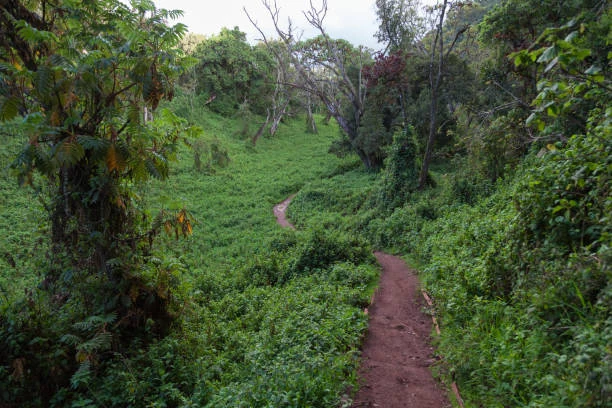
Northern Circuit Day Hike
Planning Your Tanzania Adventure
Everything you need to prepare for your Kilimanjaro climb and Tanzania trip.
Ready to plan your next adventure?
Tell us your ideas, and we’ll craft a personalized travel itinerary and reply within short time.
Ready to Climb the Northern Circuit?
Speak with a local Kilimanjaro expert today. Get a free, custom itinerary in under 24 hours.